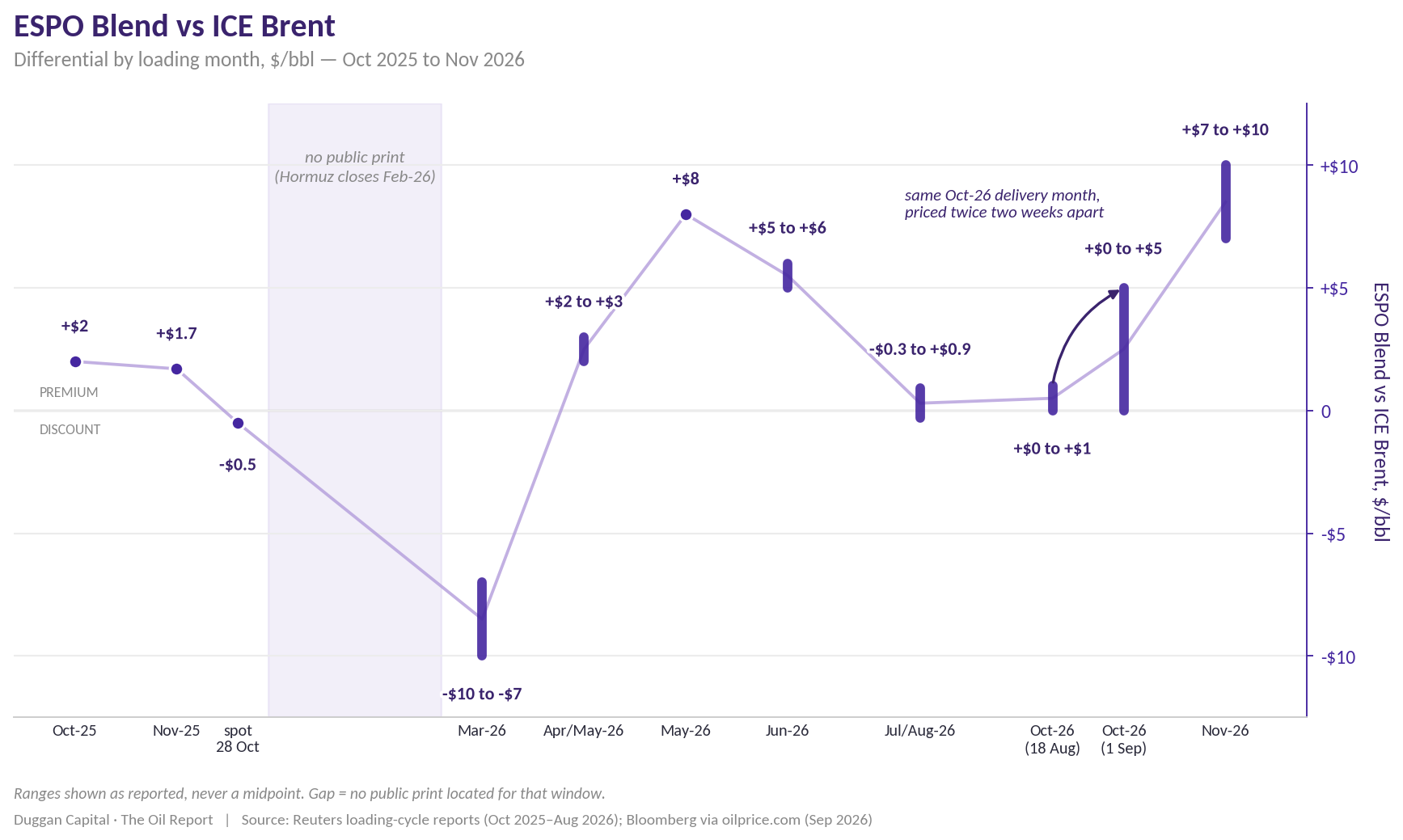
In this report: Diesel prints its all-time high as the SPR runs dry, Washington takes Venezuela’s barrels off China’s table, and China pays up to $10 over Brent for Russian ESPO out of Kozmino - the marginal barrel of the Hormuz crisis.
Last week. Brent +8.56% (+7.56$) Open $89.55 High $97.62 Low $89.03 Close $95.85
Articles
EIA weekly report - last week.
Diesel premium in Europe jumps to record high
Asia’s Oil-Buying Spree Sends Middle East Crude Prices Soaring
US firm to take over some Venezuela oilfields previously run by Chinese, Russian firms, officials say
Putin, Xi reaffirm Russia-China ties amid ‘unpredictable’ world
Chinese Refiners Pay Record Premiums for Russian ESPO Crude
UK: Jackdaw gasfield set to be approved by ministers this month, sources say
European gas inches up to lock in fourth weekly gain after breaching war-era peaks
Iran strike leaves U.S. Navy with a serious supply problem
Fed Governor Waller indicates he will support holding rates steady at September meeting
The Asphalt King Who Went Too Far
View
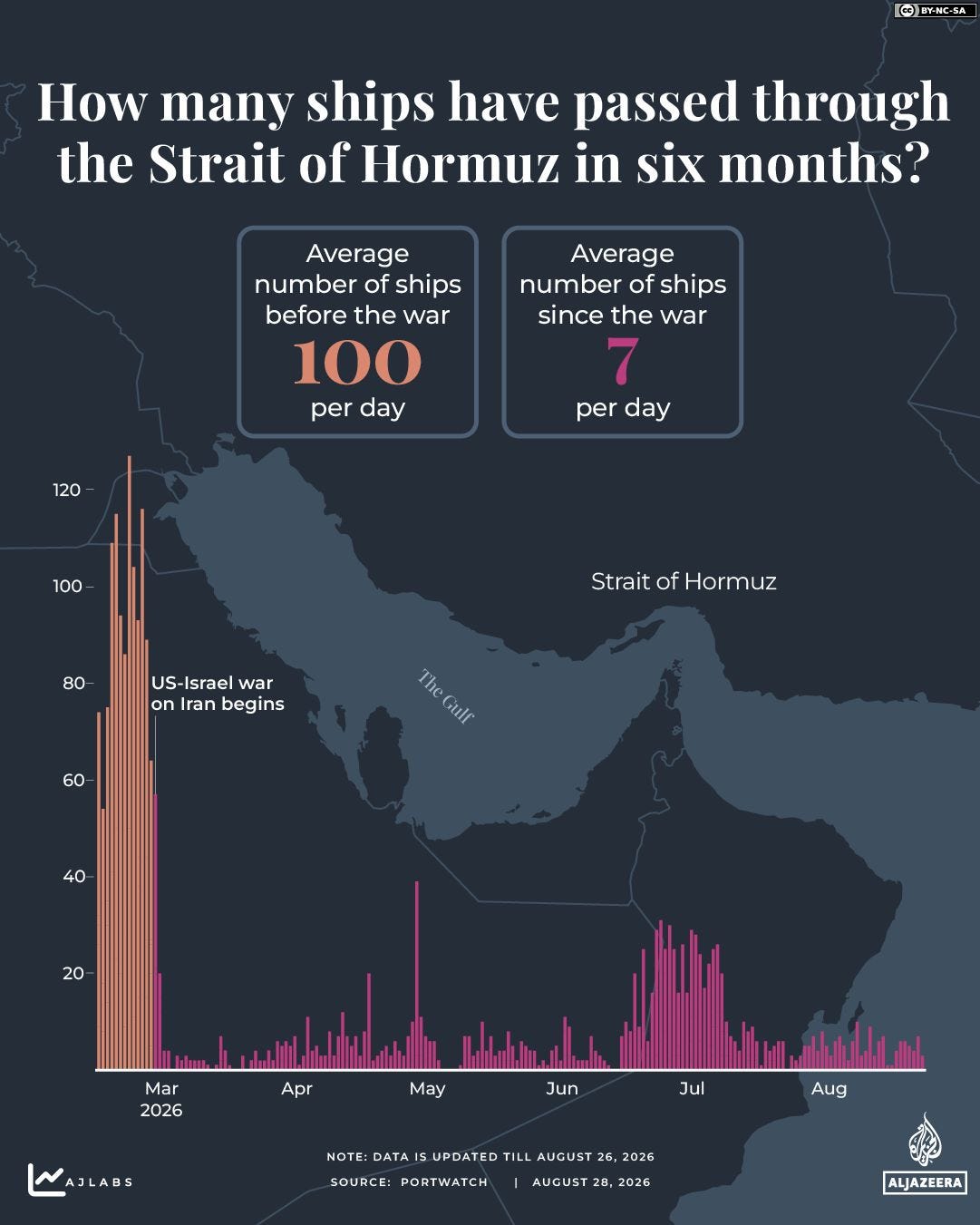
What I have been covering over the last 2 months-the refinery and diesel story-has now reached port. Welcome to the third order consequences. Global refinery is so constrained, that even with US refiners pushing utilisation to 98% in the last 2 weeks, prices on both sides of the Atlantic reached their highest levels in history last Wednesday. If you have not been following my coverage on this, please have a read of ‘Be Prepared’ Aug 2nd 2026, ‘No control’ Aug 16 or the recent ‘Crackageddon’ Aug 30th.
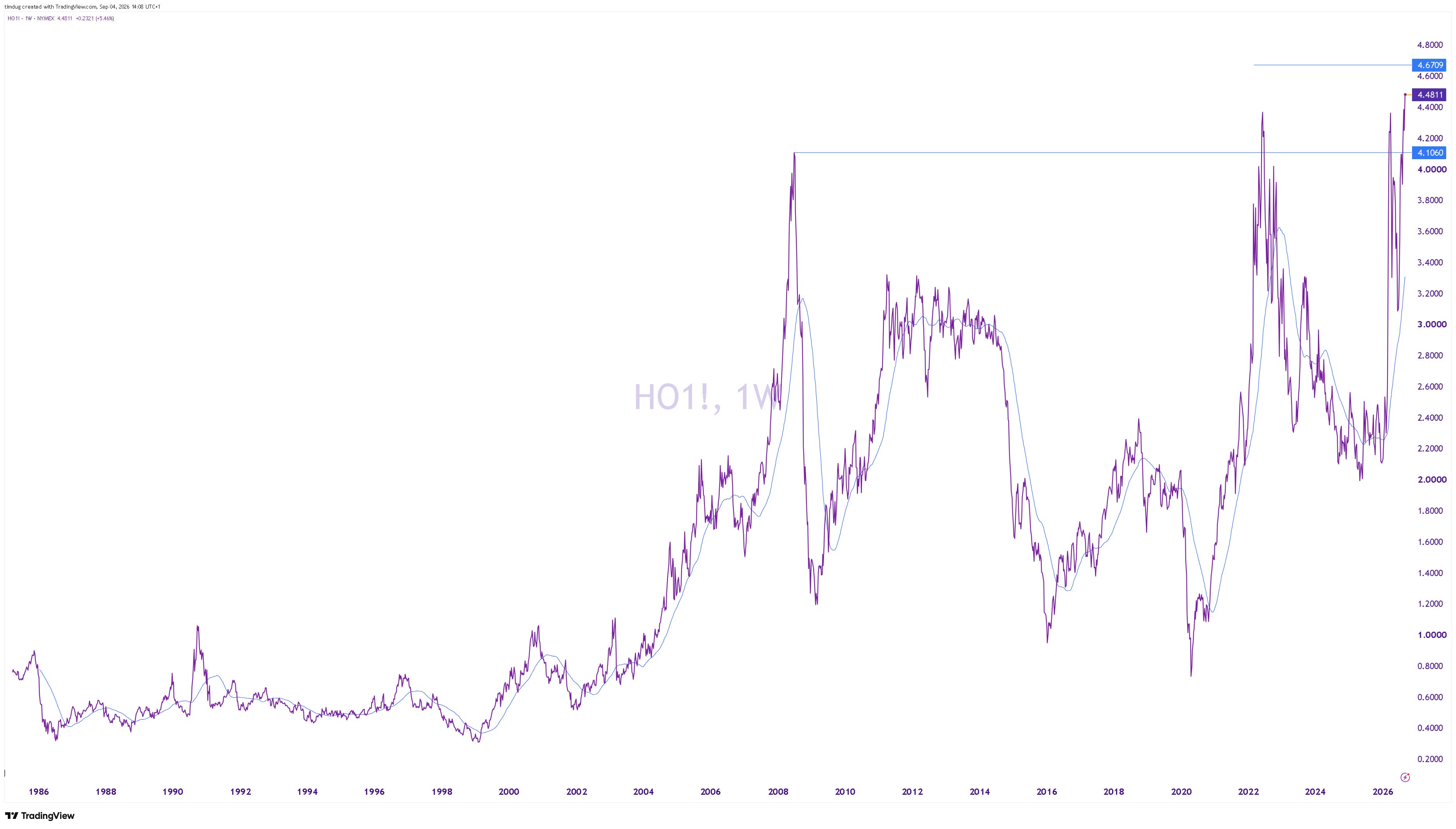
I think this is a refinery situation that cannot be solved, without bringing back online a large amount of refining, deliver more crude to more refiners globally, but also the lifting of Russian Diesel exports. With gasoline, the US EPA pulled the rip cord to allow more mixing, to essentially stretch stocks out. The only similar mechanism refiners have with diesel, is to mix jet fuel into it as they did in 2021. I see this as the only way to cool current margins. Now that the SPR strategic release is complete, we are fully exposed to the inflation transmission of this energy shock. This was starkly evident in last weeks EIA report, where we saw that if the SPR was not there, the draw would have been a nice 7.98mb from commercial stocks rather than the headline of about -4.5mb. Yes this could be observed over all of the SPR releases, but the point is that now there is pretty much no more mandated releases to come. This Wednesdays release will be interesting.
Refining and energy inflation reality
The 2022 Russian invasion of Ukraine was a shock to global energy systems biting Europe the most. This was a catalyst for a reframing of global energy security. This recent Hormuz adventure is merely episode 2 in deglobalisation. In 2022, US diesel stocks were at 117mb with 29.6 days of cover running at 93.6% utilisation. Today, US stocks are at 104.2mb with 28.5 days of cover at 98% utilisation. So we see the case for higher diesel prices, but does diesel alone impact inflation? No, it’s the broader products set, gasoline and the long tail effects that are the number one inflation risk.
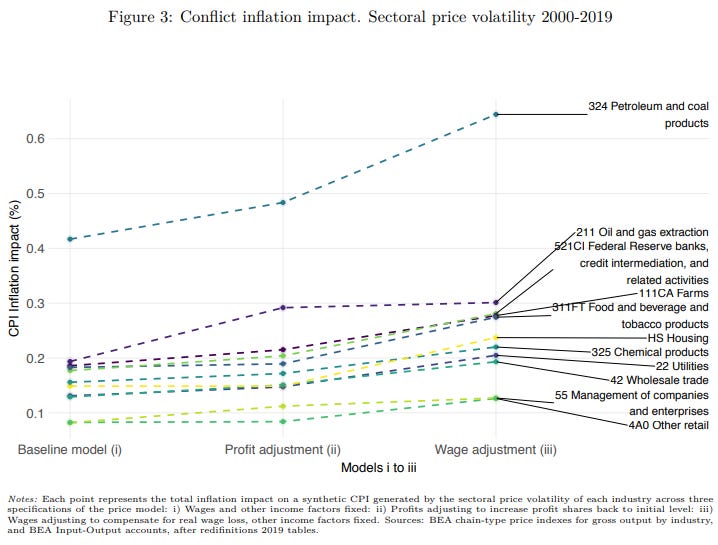
Work by The Fed and The US Political Economy research Institute at Massachusetts lays it out.
Diesel barely registers as a direct line in US CPI. BLS puts gasoline at 2.90% of the headline basket and "other motor fuels" - where diesel sits - at 0.09%. Energy as a whole is 6.38% of headline, and gasoline is 45% of that energy weight. Core CPI excludes energy entirely, so on the direct weights alone a diesel spike is a rounding error. Diesel gets into core inflation through freight, farms, utilities and food, not through the pump.
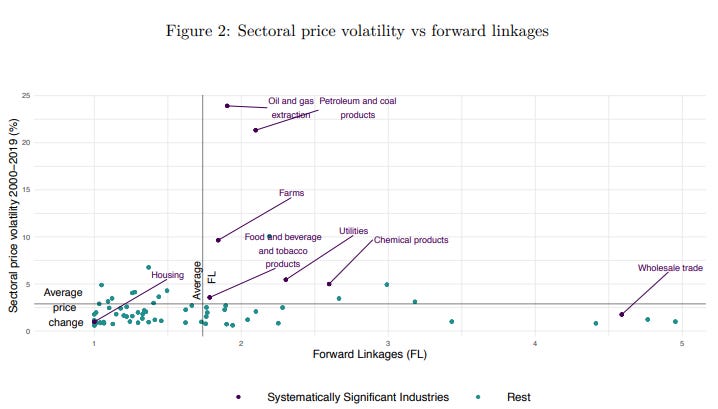
We simulate how in an input-output setup a price shock in any specific industry cascades as a cost shock through the whole system, leading to changes in the general price level. This means that we not only take direct effects of a price change on the consumer price index into account, but also the myriad of indirect eects that follow from cost changes in other sectors…..We can broadly group the sectors with the greatest systemic significance for price stability into three types: energy, basic production inputs other than energy, basic necessities, and commercial and financial infrastructure….In the energy category, the most important industry – “Petroleum and coal products” – is also the most important for overall price stability given the present production structure. This industry includes petroleum refining and is a ubiquitous input (rank 15 in terms of forward linkages) in a wide range of production activities …
“Petroleum and coal products” continue to be the most important sector by far. It is no surprise that this sectors latent importance for inflation was materialized in the global energy crisis. Reflecting the high cost of energy, the price increase of “Utilities” also climbed up even further to 26.81%, landing this sector on rank four in terms of total inflation impact….
Our finding that “Coal and petroleum products” is by far the most important sector for inflation underscores the challenges involved in maintaining price stability while transitioning to non-fossil fuel energy sources.
War at sea
"From now on, any attack against Iran’s interests and security will receive a faster, heavier and more painful response,” - Iran's Parliament Speaker Mohammad Baqer Qalibaf
In short-The US and Iran are engaged in tit-for-tat tanker strikes over the last 48hrs, that has seen The US navy hit 3 commercial Iranian shadow fleet tankers. In exchange, Iran hit several US warships patrolling the Gulf region. We are now seeing a desperation from the US side as the 172mb from SPR is now spent. My estimate 4 months ago was that we would only get to see real Iranian posturing once this SPR release was done. And here we are. With these Iranian strikes now targeting US naval assets, we can expect prices to reopen this evening gap up! More in trade section below. My recent chat with Ben Kelleran is here
Venezuelan NABEP Deal/China and the ESPO blend.
On the front of it, the NABEP deal is a great boost for US energy security and a good deal for Venezuela who are not capable of getting anything near maximum efficiency out of their oil resources. It would be straightforward to call this a form of imperialist robbery, but the net recoup to Venezuela is projected to be $200bln over the next 25 years with an additional $100bln in infrastructure development.
North American Blue Energy Partners who are running the deal on behalf of The US, now controlled by Alejandro Betancourt, gets 100-year rights over 17 fields in Lake Maracaibo and the Orinoco Belt, about 65bln barrels of proven reserves. Washington takes a 35% stake in NABEP's parent, 20% of production at cost, and right of first refusal on the rest.
Problems with this deal are everywhere. VZ currently doesn’t have an elected government. So the risk of an election cycle that moves against this deal is high, however this would be old worn territory for a US Administration and Chevron. Read - Confessions of an Economic Hitman for more juice on this. Basically, the US will enforce this deal with a jackal.
But there is a party that is more powerful than the VZ government. A creditor called China.
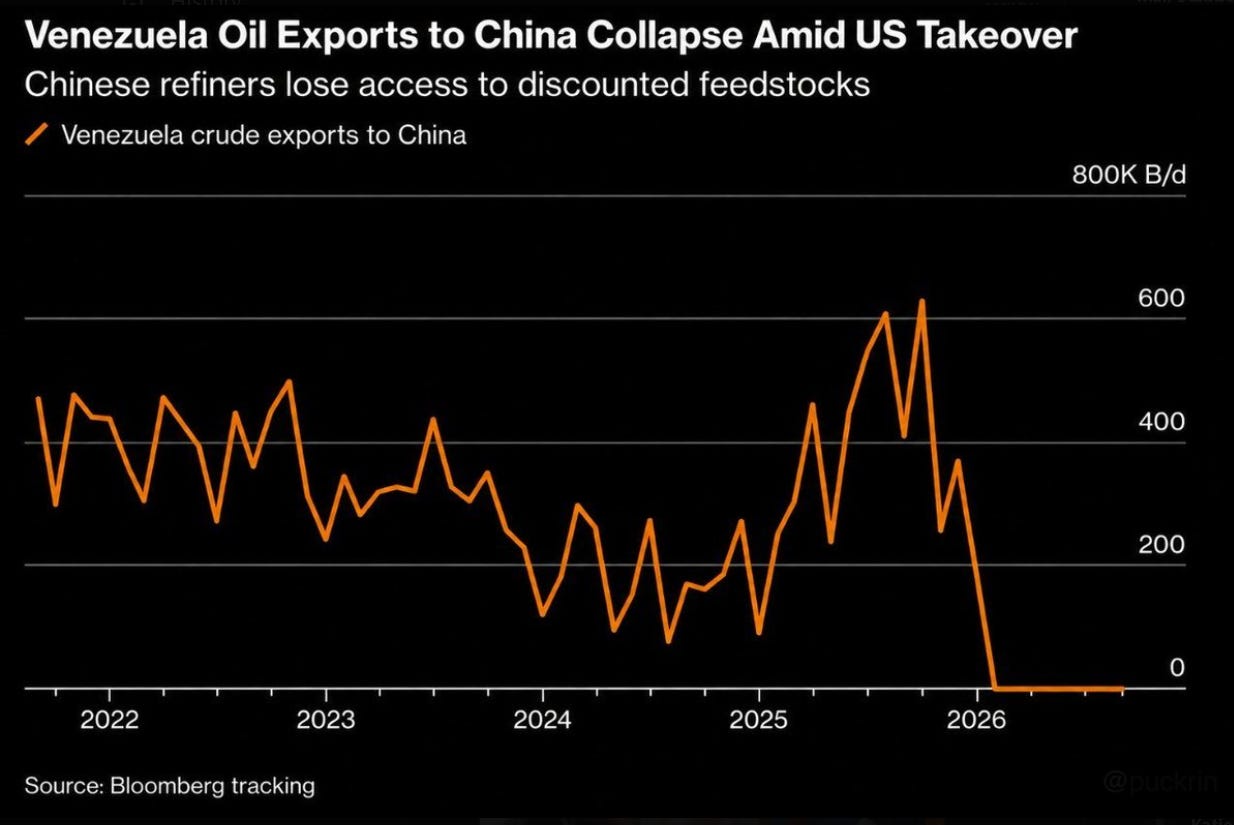
China is getting hammered by The US, not only in Hormuz, but in Venezuela. Financially, Venezuela owes Chinese state banks $10 to $12bln in outstanding loans. They are contracted to repay these loans not in cash, but in good old Orinoco crude. Specifically 50-100kb/d of VZ crude has been carved out specifically to work down the debt since 2020. NABEP absorbs 14 of the deals VZ held with foreign operators, pushing SINOPEC, CNPC, ChinaSs’ Concord Resources and Roszarubezhneft aside
The Net Net of this is a ‘move to zero’ of oil that was bound for Chinese teapot refiners. The battleground is not just in the high seas. It is in flows control. So where is China going to replace these flows? Cue dark music………..From Uncle Vlad!
![Russian President Vladimir Putin and Chinese President Xi Jinping shake hands during a meeting on the sidelines of the Shanghai Cooperation Organisation summit in Bishkek, Kyrgyzstan, on August 31, 2026. [Pool/Reuters]](https://substackcdn.com/image/fetch/$s_!bXro!,f_auto,q_auto:good,fl_progressive:steep/https%3A%2F%2Fsubstack-post-media.s3.amazonaws.com%2Fpublic%2Fimages%2F9974d346-3143-4e89-863c-2afefed46fdb_770x513.jpeg "Russian President Vladimir Putin and Chinese President Xi Jinping shake hands during a meeting on the sidelines of the Shanghai Cooperation Organisation summit in Bishkek, Kyrgyzstan, on August 31, 2026. [Pool/Reuters]")
The ESPO blend.
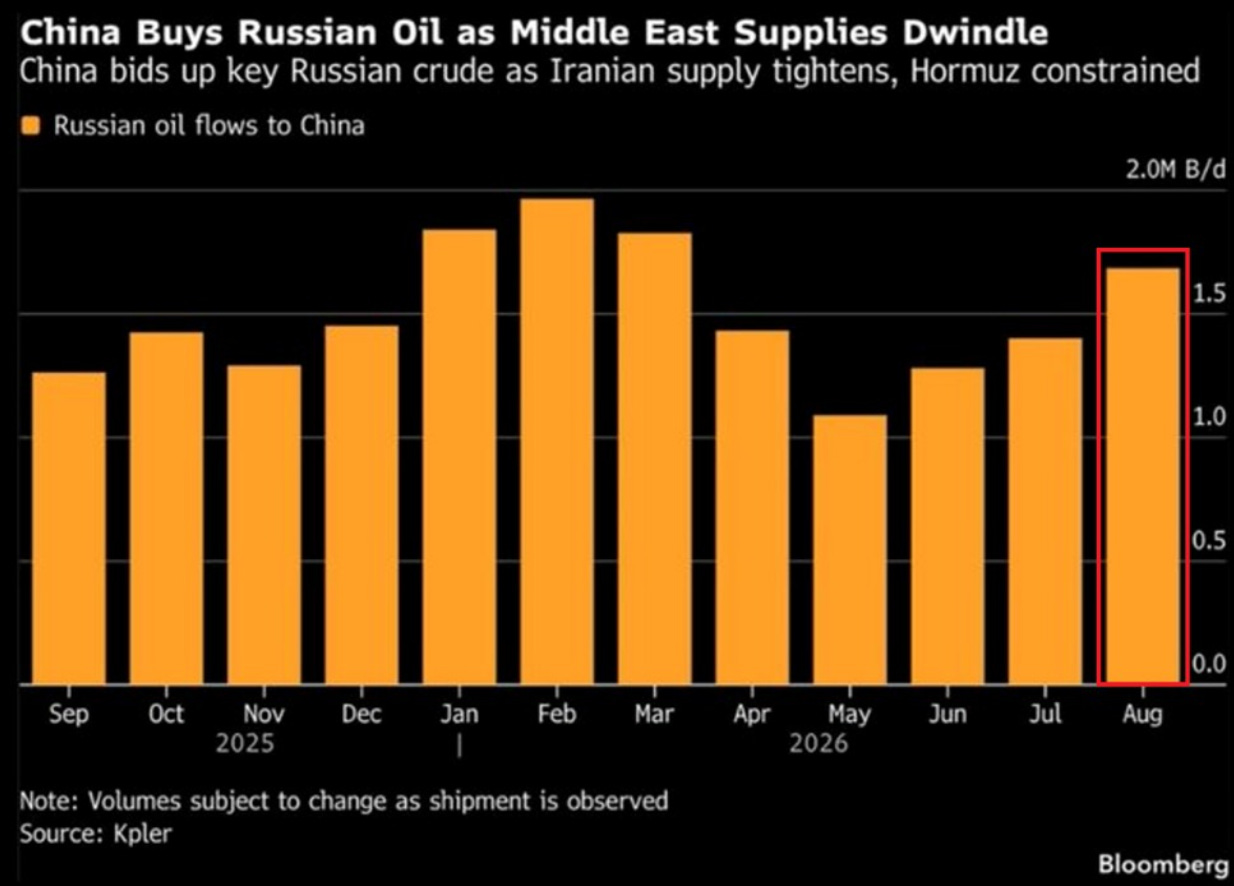
This marginal Venezuelan and MEG region barrel, will now be provided by Russian flows. Shipments from the Russia port of Kozmino to The Chinese port of Rizhao are up 57% m/m and to Dongjiakou are up 67% mom. Both Shandong Teapot refiners.
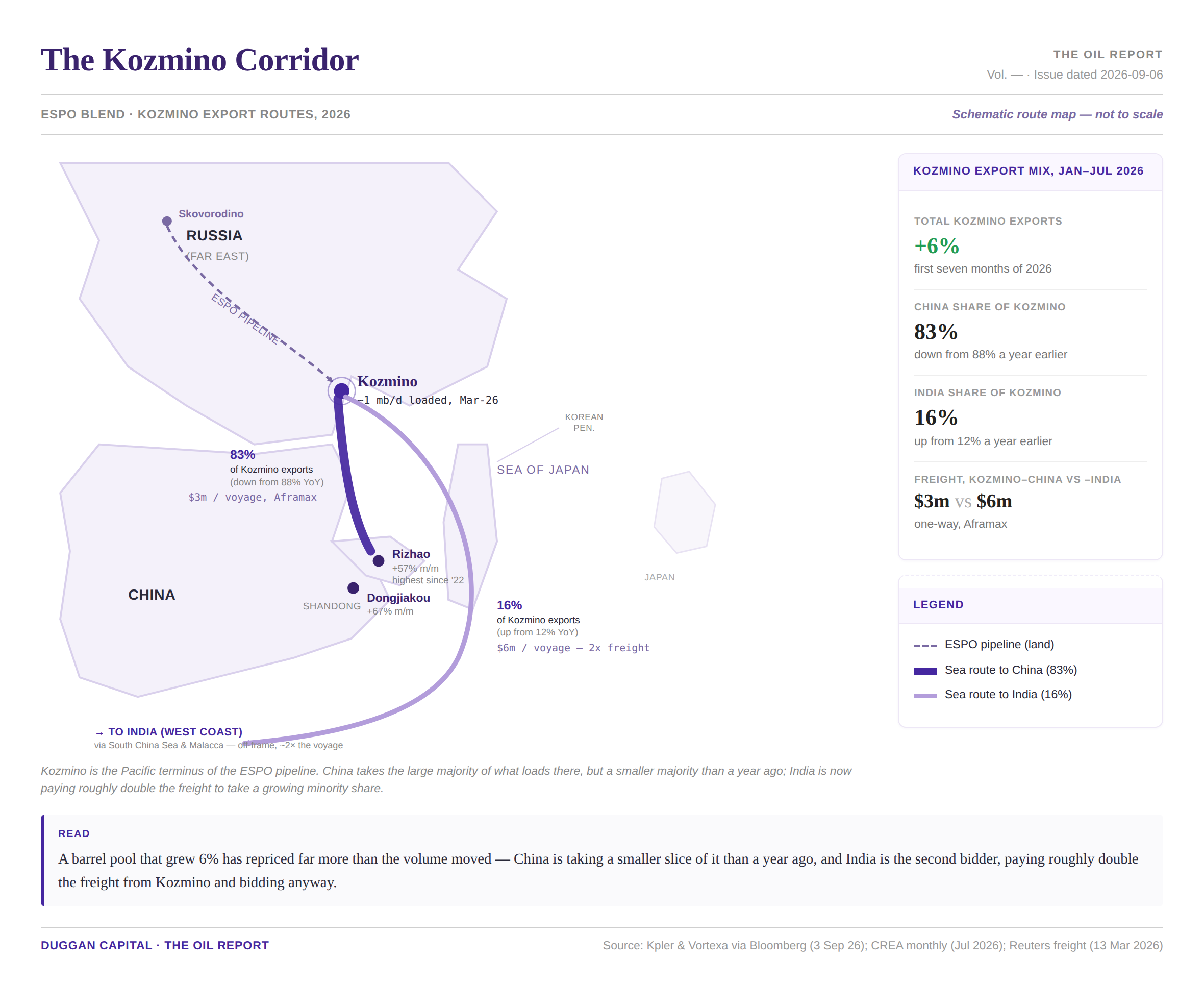
The premium also paid has been worth noting. The ESPO blend crude IS the Chinese marginal barrel through The Hormuz crisis.