



In this report: $TTF is making new highs while NATTY had its worst week since February. The market has given up waiting for the cold spell and the Strait is no closer to being opened.
Last week.
HH -15.3% (-$0.476) O $3.090 H $3.184 L $2.620 C $2.640
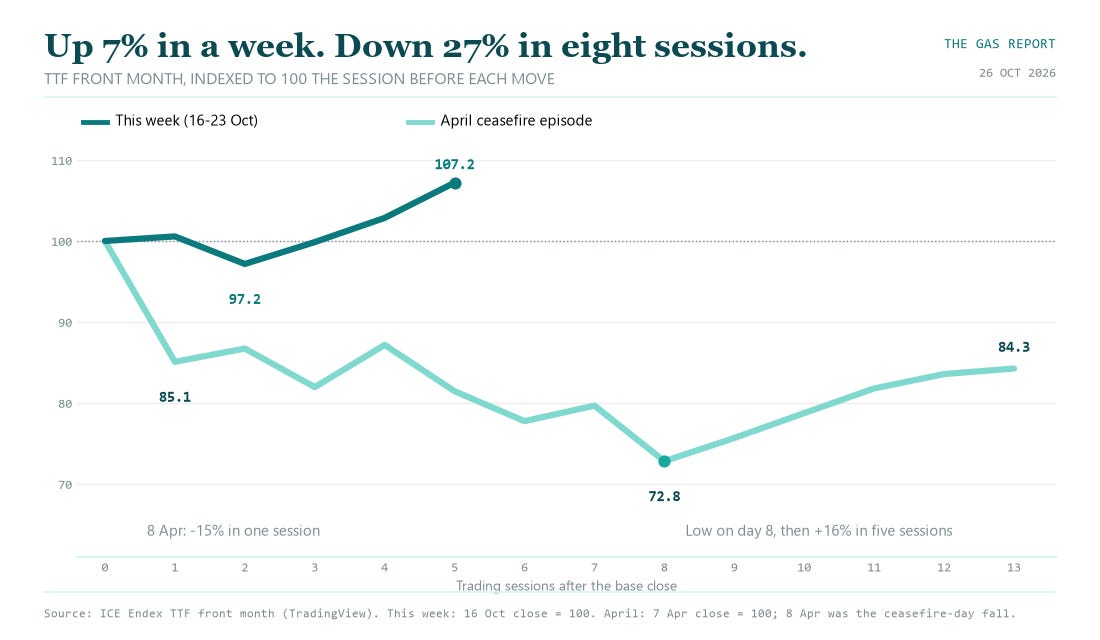
TTF +7.2% (+EUR 6.31) €89.08 H €94.11 L €83.41 C €93.85
Articles
Israeli military breaks silence on purported feud with Benjamin Netanyahu
World’s top LNG buyer sees Qatar supply disruption persisting into winter
Live Updates: Trump says he’s weighing deal with Iran against action to “finish them off”
Nat-Gas Prices Fall to New 6.25-Month Low Due to Ongoing Warm Forecasts
View
Henry Hub: Giving up on the cold.
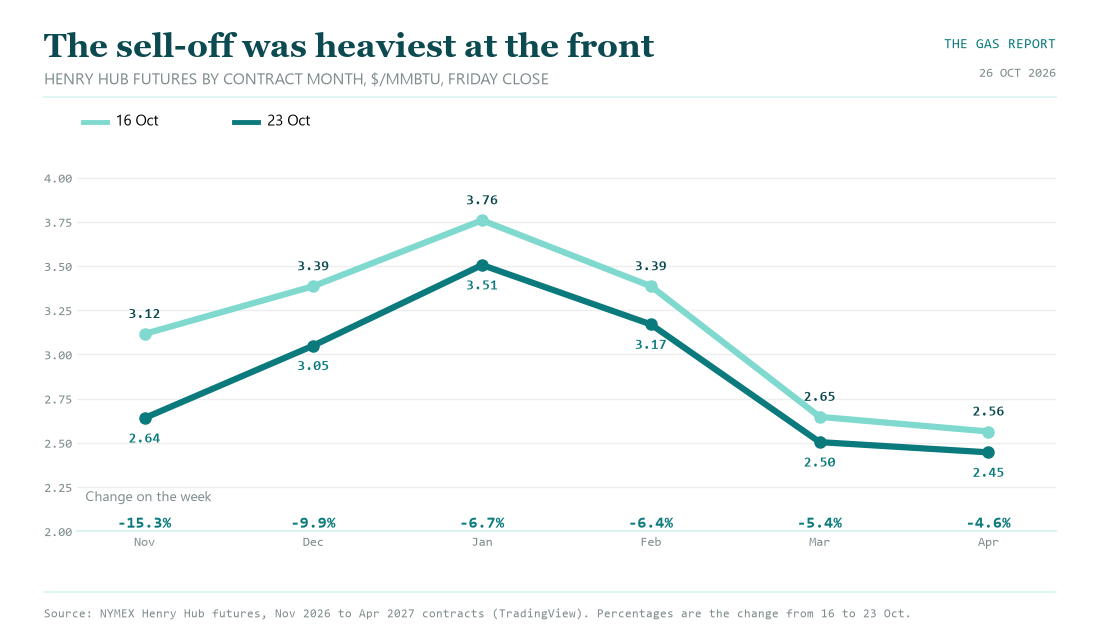
Henry Hub dropped about 15% this past week. The standard easy answer most reports are giving is “a warmer winter outlook”. This isn’t the first time we have heard that this winter, this has been the story each week, but each other week didn’t drop 15%, so what changed? Until now, we’ve been slowly pricing the warmer winter, but we have been cautious of a cold snap. Considering how crowded short the natural gas market has been these past few weeks, any sign of a cold snap would have created a considerable short squeeze. Last week, speculators have given up waiting on a short squeeze. Managed money cut their long positions by over 10% as of the 20th of October, one of the largest cuts to long positions in the last 2 years (see more in COT section).
Henry Hub: A classic tale of supply and demand
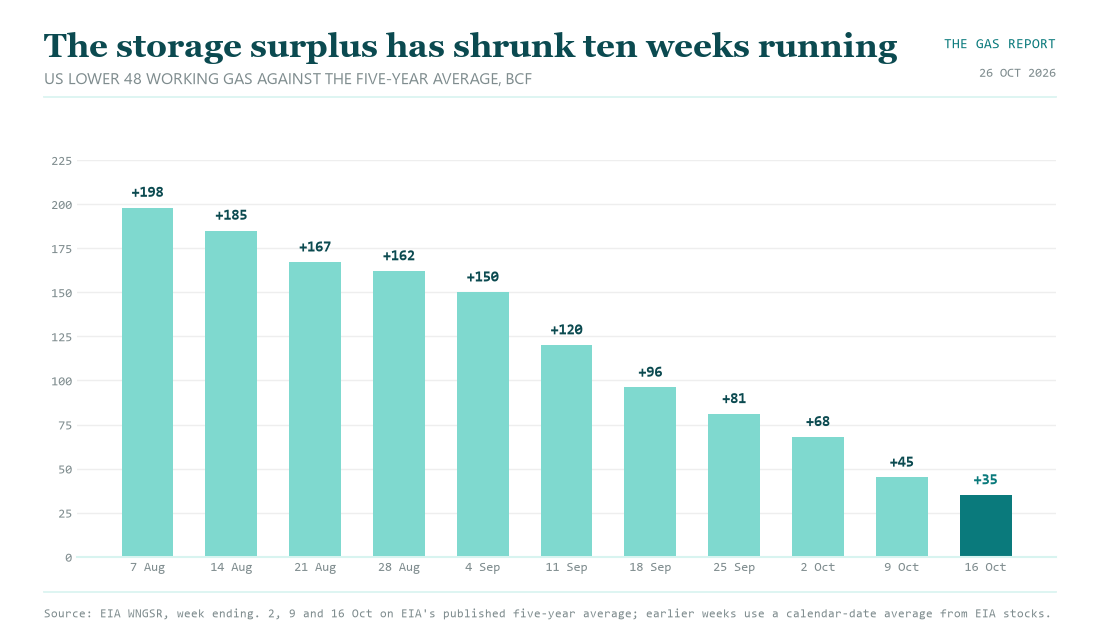
Nothing in the physical market explains it. The storm shut in about 1.26 Bcf/d at its peak, roughly 1% of US output, and the gas is back: production was 113.8 Bcf/d on Thursday, 4% above its low during the storm (BNEF). LNG feed gas ran at 20.6 to 20.9 Bcf/d, at or near records. Thursday’s storage build, +77 Bcf, came in below the five-year average, and the surplus has shrunk ten weeks running, to +35 Bcf. What changed was the tape. Once $3 gave way on Tuesday, technical selling accelerated on Wednesday, and funds waiting for the cold, stopped waiting. The balance didn’t turn bearish. The positioning did.
Fear and Fact
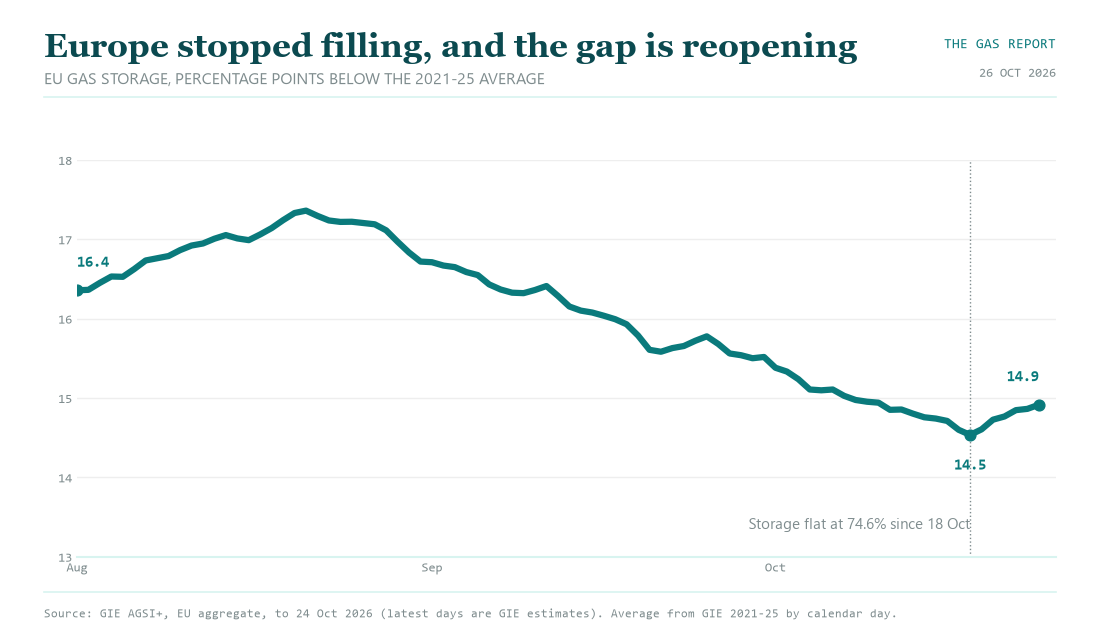
TTF finished the week at a multi-year high of €93.85/MWh, up 7.2% on the week. We were actually down about 2.8% on the week after Tuesday’s close. Price jumped for the rest of the week on strike-plan headlines. That is even greater risk being priced in. However, I reiterate not for the first time, that below this fear premium, is genuine structural supply and storage issues. No doubt the risk premium is growing and accounts for a lot of the price action we have seen, but the underlying price excluding risk premium is also rising. This means if we had a deal come into play today and everything was sunshine and rainbows, while of course price would drop heavily, we would not return to normal.
The Clock is the Midterms
The strait has a date on it now. The NYT and ABC both reported that the US and Israel have drawn up plans for renewed strikes on Iran, and the NYT says they would come after the 3 Nov midterms. No named official has confirmed it. On Friday Trump said, “we could end the Iran war very quickly.” Iran’s own offer is still on the table: the US lifts its blockade and oil sanctions, a ceasefire on all fronts follows, and the strait reopens on day six. Washington has not said yes. The issue is order, not content. Iran wants the blockade and sanctions removed first before discussing nuclear, the US wants the nuclear issue dealt with. Looks to me like the problem is Iran don’t want to give up leverage, and Washington wants out without looking like they lost. For now, TTF is pricing the risk, after the midterms we will price the decision.
EIA Report
The 77 Bcf build for the week ending 16 October was a hair below the 78 Bcf analysts expected. A year ago the build was 86 Bcf and the five-year average for the week is 87 Bcf, according to EIA. Stocks reached 3,644 Bcf, 35 Bcf (1.0%) above the five-year average and 152 Bcf below a year ago. In line with the forecast but small against the seasonal norm, so the surplus shrank for a tenth straight week, from +198 Bcf on 7 August and they continue to sell. The leak over the last three weeks: -11, -23, -10. Smaller than normal again: the surplus is still bleeding, and the price is selling it. More in the EIA Gas Inventory.
