In this report: Details on Iran/Oman deal and the tightening strategic runway.
Last week. Brent -9.51% (-$8.66) Open $82.80 High $86.33 Low $78.11 Close $82.38
‘‘Iran and the U.S. are not engaged in talks and Tehran will not start them as long as Washington breaches an interim deal signed in June’’, Iranian Foreign Minister Abbas Araqchi, Mehr news Aug 9th
"Whenever the American side accepts the conditions of the Islamic Republic of Iran and abandons its interventionist approach, the conditions for reopening the Strait of Hormuz will certainly be provided," Mohebbi added in comments relayed by Tasnim Aug 9th.
‘‘The Strait of Hormuz is an international waterway, not one party controls the lanes or transits through them’’- US official Thursday 6th Aug 2026, source -Newsquawk.
Articles
Yemen’s Houthis attack Saudi refinery after kingdom signs defence pact
Iran says deal on Strait of Hormuz is close but not enough to open the waterway
A visual guide to Iran’s coastline and strategic islands
Mapping the Red Sea attacks - Feb 2026
Saudi Arabia, Turkey, Pakistan pledge mutual defence as Middle East turmoil escalates
A deal with Iran over the Strait of Hormuz may require a compromise from Trump
US nonfarm payrolls unexpectedly decline in July; unemployment rate eases to 4.1%
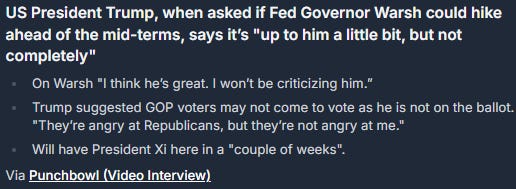
President Donald Trump: The 2026 Midterms Interview with Punchbowl News
View
If you have not yet had a chance to watch my interview with Patrick Rutty from Enverus, it is well worth a watch. We go in-depth into E&P as it is laid out for 2026 and beyond. It is perhaps the most insightful piece I’ve done to date on where the majors and minnows are acquiring acreage, drilling, and how successful they are on a global scale. A must-watch if you are looking to invest in some oil names in 2026 and 2027. It also feeds into the series I’m doing on ‘Trading the Energy Supercycle’. Okay, now to the report.
A peace deal is far from being struck here, regardless of the talking heads and political murmurings. The Houthis have just attacked Saudi Red Sea refining ports as of Sunday afternoon. Bullish action in the face of bearish political tones.
Let’s focus on The Iran/Oman agreement and the global stocks picture.
According to this draft plan under parliamentary review:
The passage of vessels belonging to the United States, Israelis and other hostile countries through the Strait of Hormuz will be prohibited.
Ships related to Israel, whether military or civilian, will not have the right to transit through this area.
Vessels or cargoes that play a role in actions against the Resistance Front will also be subject to the ban.
Countries and individuals that have caused damage to Iran will not receive permission to pass through the Strait of Hormuz and the Persian Gulf until compensation is paid.
Heavy fines, including up to 20% of the value of the goods, will be imposed on violators. The cargo is anticipated.
The government will be required, in cooperation with the armed forces, to assume responsibilities such as guiding navigation, monitoring vessel traffic, and protecting the security and environment of the Persian Gulf.
This plan is still in the expert review stage, and the parliament has asked experts to submit their suggestions for completing it.
An informed source in the Foreign Ministry told Fars: According to the framework of the negotiations between Iran and Oman,
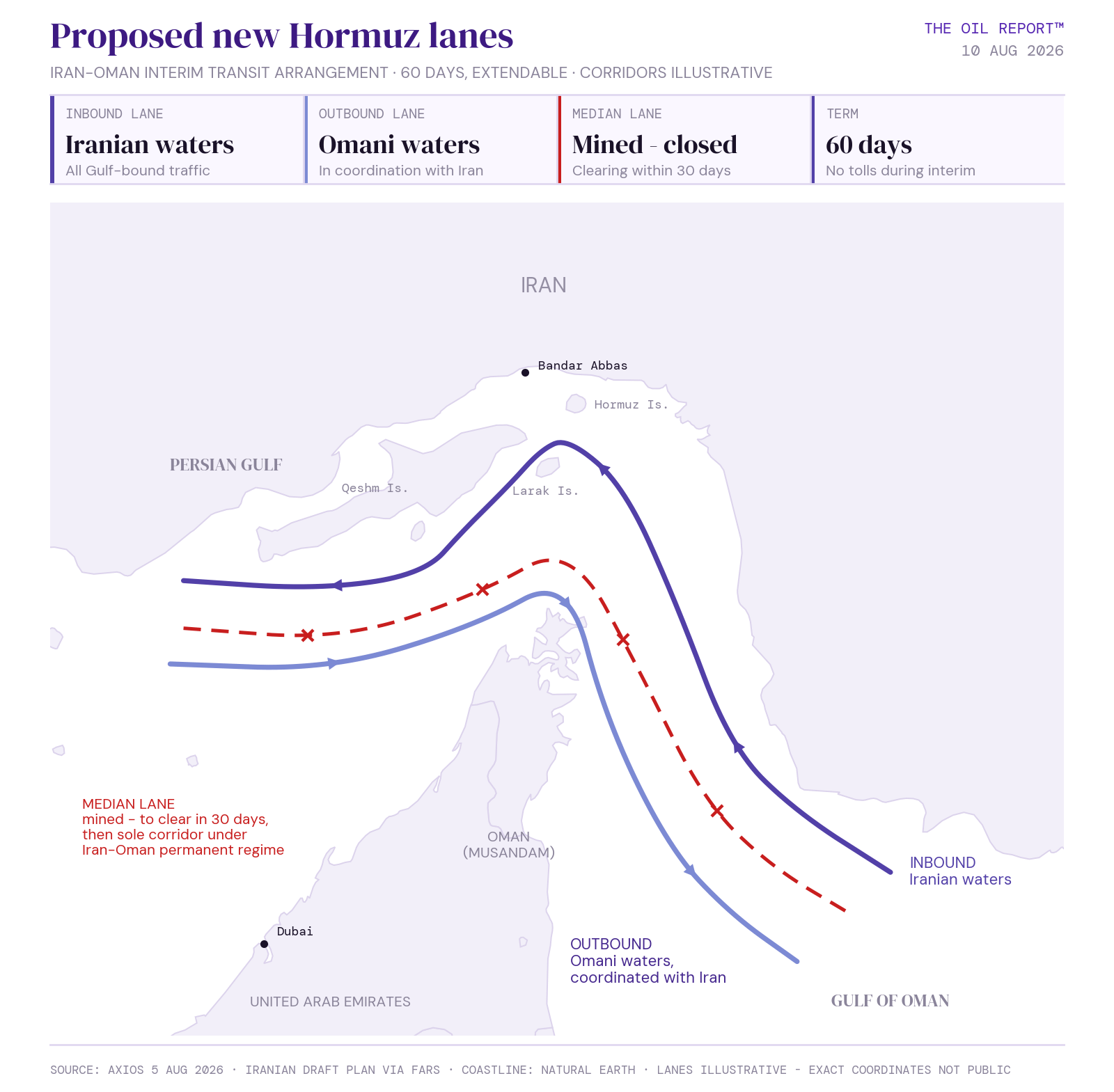
The entry to the Strait of Hormuz is to be carried out through the northern corridor of the strait near the Iranian coast, and the exit of ships will be through the southern corridor near the Oman coast.
After the specified deadline, the passage of ships through both the northern and southern corridors will be stopped and all traffic will take place through the middle corridor, with the difference that the entry of ships will be managed by Iran and the exit will be jointly managed by Iran and Oman.
The determined fees for ships to pass through the strait will be determined in the form of various service prices.
The news that Iran and Oman disagree on the percentage of the value of ships’ cargo [a tariff of 7 or 3 percent of the cargo value] as payment is not true, and the receipts from ships are a function of many variables from Including the amount of services we can provide.
Insurance, refueling, environmental costs and such are among the services that ships must pay for.
Red Sea
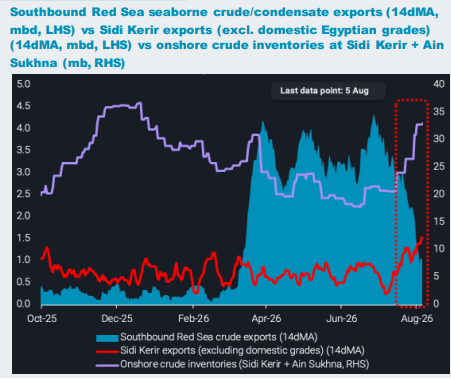
So it’s no surprise that loadings at Yanbu are ncow redirected almost fully north to Suez.
Southbound Red Sea & Gulf of Aden seaborne crude/condensate liftings peaked at dataset high of 4.3mbd (14dMA) on 27 June, with over 95% loaded at Yanbu as Saudi Arabia rerouted exports away from the Strait of Hormuz. Houthi attacks in the Bab el-Mandeb on 19 July have renewed security concerns along the route and curtailed southbound flows, which fell 2.2mbd (70%) between 19 July and 5 August (14dMA), though the decline had already begun before the attacks. Total Yanbu loadings/liftings are down just ~1.8mbd over the same window, to 3.5mbd (14dMA). Volumes have rerouted northbound. Via Vortexa