


In this report: This is the largest energy disruption since 1979. I will outline the main elements that need attention. They include prior structural backdrop, Chinas role, Iranian succession and Military escalation backdrop.
Article:
Trump and Netanyahu want regime change, but Iran’s regime was built for survival. A long war is now likely.
Lloyds list: Maritime warning zone in place as US and Israel launch ‘massive’ strikes on Iran
OPEC Hike only 206k bpd. Saudi Arabia, Russia, Iraq, UAE, Kuwait, Kazakhstan, Algeria, and Oman adjust production and reaffirm commitment to market stability.
Status: Sunday March 1st. 11am GMT
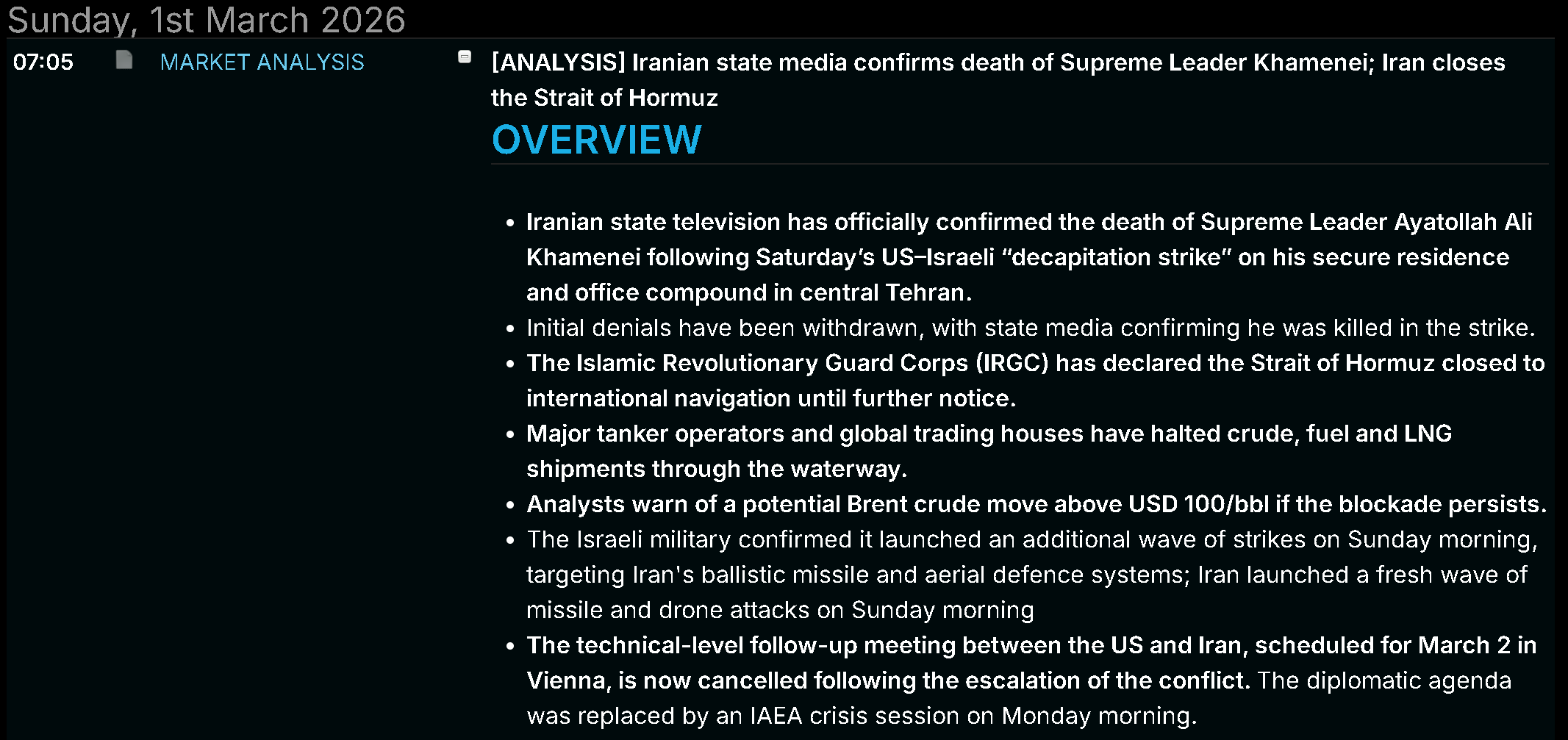
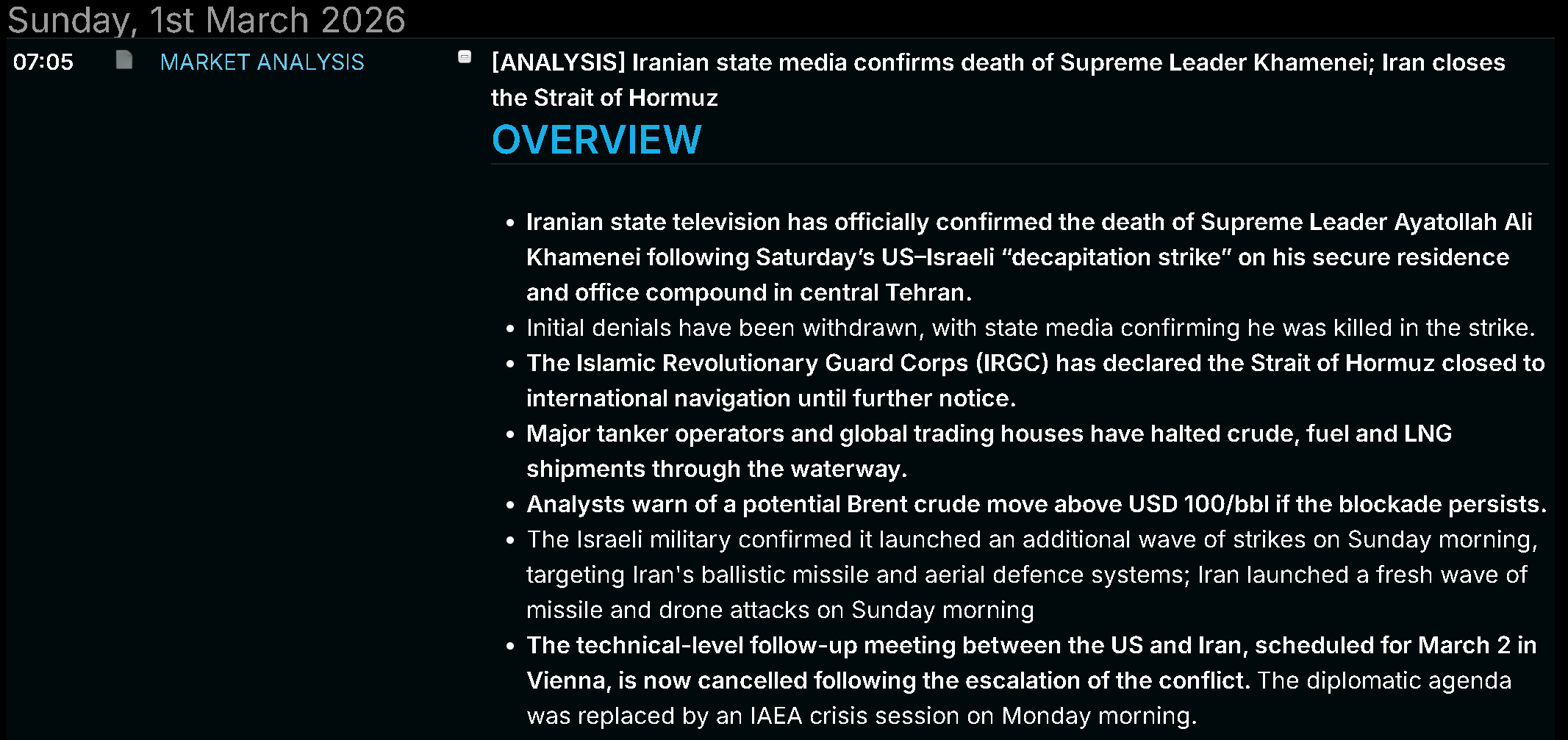
Iranian state media confirms the death of Supreme Leader Ali Khamenei.
The IRGC has declared the Strait of Hormuz closed to international navigation.
Major tanker operators and global trading houses have halted crude, fuel and LNG transits.
Fresh Iranian missile and drone strikes have targeted US and Israeli assets. Israel responding in kind.
Diplomatic talks are cancelled; an IAEA crisis session replaces negotiations.
OPEC-8, meeting today, may consider a significantly larger supply increase 411–548 kb/d versus the previously expected 137 kb/d.
Source: Newsquawk.com
Situational awareness
This is now a live transit disruption scenario. The Strait of Hormuz has reportedly been declared closed by the IRGC, major tanker operators have halted sailings, and OPEC+ hiked above its planned 137k bpd to 206k bpd. That buffer is politically significant but mechanically insufficient if Hormuz remains shut. This is no longer a 1–2 mb/d export risk — it is an 18–20 mb/d transit choke.
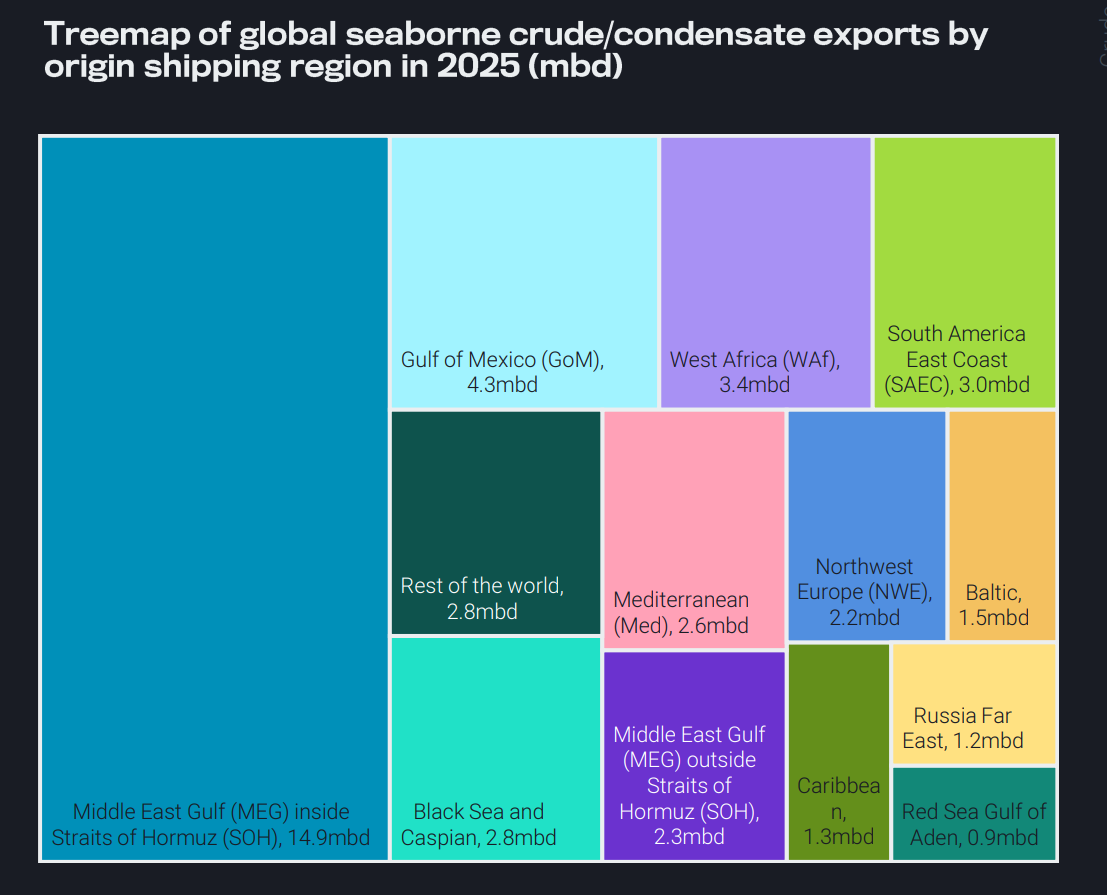
The market will open in full price discovery mode.
This is an extremely dynamic situation that currently pivots on who will replace The now confirmed dead Supreme Leader Ayatollah Khamenei- (covered in a supplemental report here). This has tipped the geopolitical risk framework into a regime-risk valuation, which is forcing producers to reconsider output strategy. OPEC are convening today-more below -as was previously scheduled (Sunday 1st March). What matters now isn’t just short-term risk premium- it’s whether sustained flows and spare capacity deployment can offset elevated freight cost, potential transit instability, and policy shifts.
Below, I will cover where the market currently sits on each of these components.
