

Summary
The blueprint for gunboat diplomacy runs from Perry to the post-1946 U.S. mandate of forward naval presence to secure oil flows and contain rival powers. Hormuz remains a potent disruption lever for Iran, but outright closure isn’t realistic. The real risk is asymmetric, multi-domain disruption that drives volatility rather than sustained supply loss. Markets know this-headlines can force sharp front-month repricing, but history points to rapid military response, partial rerouting, and fast normalization. Gunboat diplomacy hasn’t gone away; it now sits permanently inside the oil market’s risk premium.
Articles
The Goreh-Jask Oil Pipeline in the Iranian Geopolitical Chessboard
US Gunboat diplomacy-The Perry expedition
From the 1630s, Japan deliberately shut itself off from the outside world under the Sakoku Edicts. Banning most foreign contact and expelling missionaries, Japan tightly controlling trade through a handful of ports such as Nagasaki, where only the Dutch, Chinese, and Koreans were tolerated. This wasn’t paranoia. Earlier encounters with Portuguese and other European seafaring powers had made clear how quickly trade, religion, and imperial ambition could blur into one another.
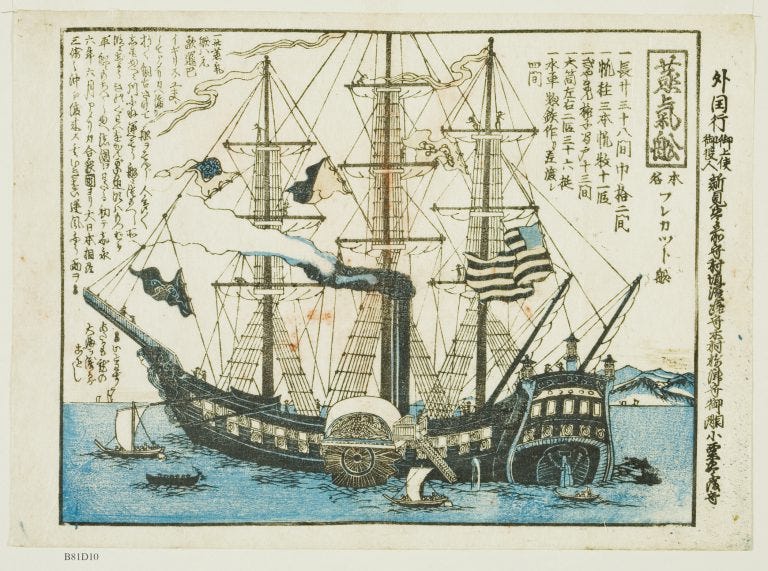
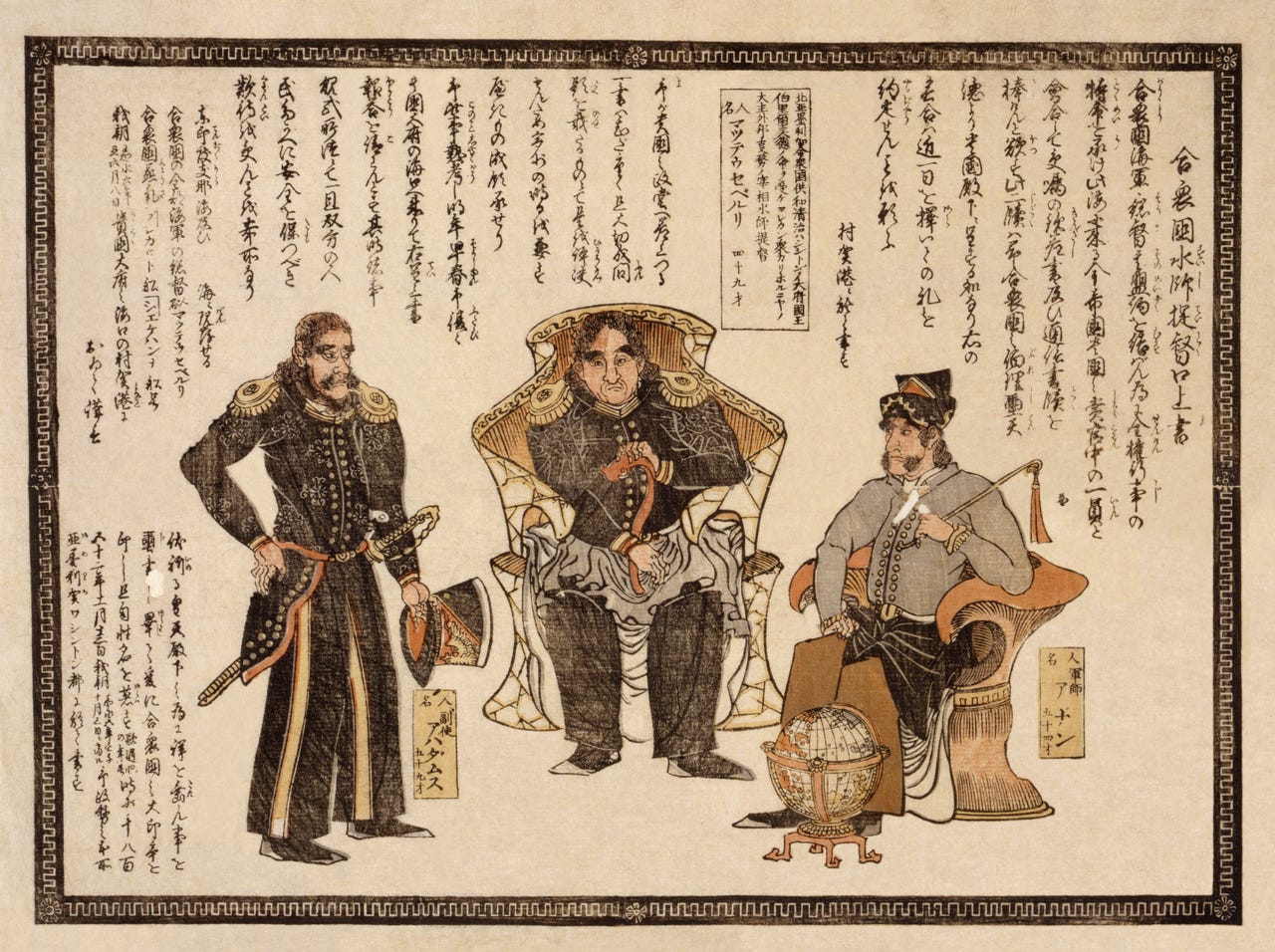
By 1842, that caution looked well-founded, as the Opium Wars showed how Western nations could quite literally batter open Asian markets. So when U.S Commodore Matthew Perry arrived in 1853–1854 with his “Black Ships,” carrying a letter from President Millard Fillmore, Japan had little illusion about what refusal may bring. The result was the Convention of Kanagawa in 1854. The Perry expedition is considered to be the first historical instance of US Navy Gunboat diplomacy. But certainly not the first bout of conflict the US navy saw in history.
The Barbary Wars
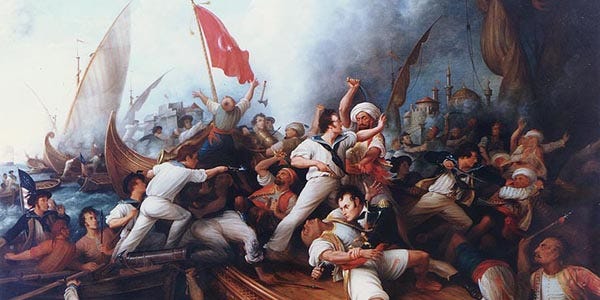
The first ‘hot’ conflict for the US navy was The Barbary Wars in 1801-1815. Long before Perrys expedition. This is not considered strictly to be the first instance of ‘Gunboat Diplomacy’ given that, well, there was no diplomacy at all. It was all out naval warfare against The Barbary state of Tripoli-then part of The Ottoman Empire. Effectively, The Berbers (North Africans) were trying to raise shipping tariffs on Sweden to extortionate levels. This was no good to western adventurism and trade. So, good old Uncle Sam and his young navy stepped in to protect commercial shipping interests.
US Gunboat Diplomacy in The Middle East.
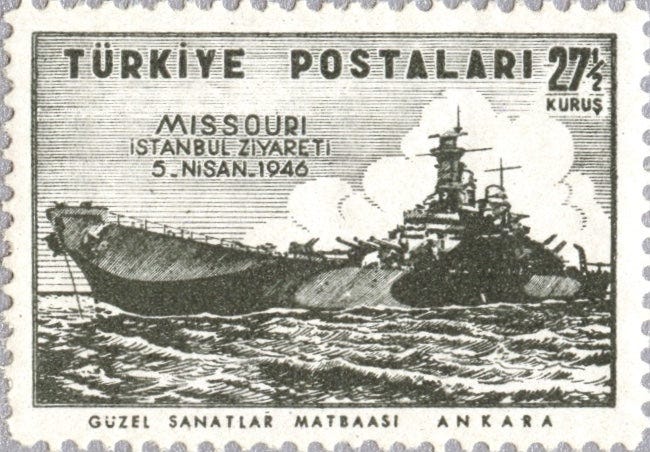
1946, the battleship USS Missouri sailed into the Eastern Mediterranean, an early and deliberate signal of American naval power. The message was straightforward: secure U.S. oil interests and contain the expanding influence of the Soviet Union, as Europe and the Middle East were being reshaped after World War II. That posture hardened over the following years into the Cold War itself. Defining relations between East and West for decades. While tensions briefly thawed under Ronald Reagan and Mikhail Gorbachev, the underlying US gunboat mandate never really changed. Strip away the rhetoric and we are back where we started: naval power forward-deployed, oil flows protected, and Russia once again treated as the strategic counterweight. A foothold in Iran, is a foundational step into Russia and the real prize-‘The Motherland’ as discussed in this report last August.
1980-1988 Tanker War.
This is the closest analogue there is the a hot conflict in the current environment. During the Iraq-Iran war 1980-1988, Iraq attacked Iranian ships in the Straits as an effort to disrupt Iranian exports and inbound supplies. Iran countered this by attacking US flagged tankers transiting via the Straits. Whom were in turn, under US naval protection. This was a multi domain attack, causing maximum disruption.
Lessons learned.
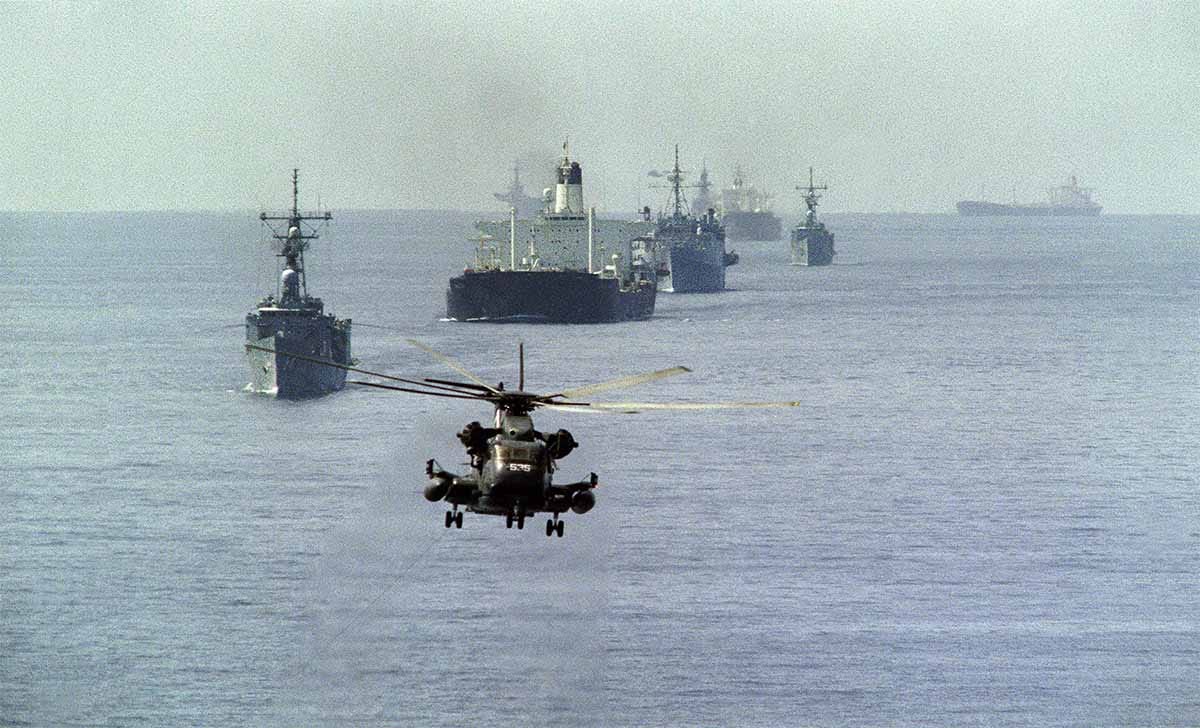
Oil tankers are not very vulnerable to damage. 61 percent of the ships attacked during the Tanker War were oil tankers. In total, only 55 of the 239 petroleum tankers (23 percent) were completely sunk or declared CTL, compared to 39 percent of bulk carriers and 34 percent of freighters.[ix]
The oil market is likely to adapt to disruption in the Strait of Hormuz. Initially, the Tanker War led to a 25 percent drop in commercial shipping and a sharp rise in the price of crude oil. But the Tanker War did not significantly disrupt oil shipments. In fact, Iran lowered the price of oil to offset higher insurance premiums on shipments, and the real global oil price steadily declined during the 1980s. Even at the its most intense point, the Tanker War failed to disrupt more than two percent of ships passing through the Persian Gulf.
Iran has little incentive to close the Strait of Hormuz. Despite repeated Iranian threats to close the Strait of Hormuz during the Tanker War, Iran did not follow through with this threat, as they themselves depended on the sea-lanes for vital oil exports.
History of US Gunboat diplomacy in The Middle East.
1801–1805 — Tripoli / Barbary Coast: To end tribute demands and protect U.S. commerce, the U.S. Navy blockaded Tripoli and conducted coastal raids, resulting in a negotiated settlement that curtailed attacks on U.S. shipping.
1815 — Algeria: To permanently suppress Barbary piracy, the U.S. Navy launched decisive naval strikes against Algiers, forcing an end to tribute payments and the release of American captives.
1946 — Iran: To deter Soviet territorial ambitions in northern Iran, the U.S. signalled military and naval readiness, contributing to a Soviet withdrawal without direct conflict.
1958 — Lebanon: To stabilize a pro-Western government during regional upheaval, U.S. naval forces landed Marines from offshore fleets, successfully restoring order before withdrawing.
1967 — Eastern Mediterranean: To deter Soviet intervention during the Arab–Israeli Six-Day War, the U.S. surged the Sixth Fleet, preventing superpower escalation despite the USS Liberty incident.
1973 — Mediterranean and Red Sea: To counter Soviet naval mobilization during the Yom Kippur War, the U.S. deployed major naval forces, helping cap the conflict without direct U.S.–Soviet confrontation.
1983–1984 — Lebanon: To coerce Syrian-backed militias amid Lebanon’s civil war, the U.S. Navy conducted shore bombardments, which failed to achieve political objectives and preceded U.S. withdrawal.
1987–1988 — Strait of Hormuz: To secure oil exports during the Iran–Iraq Tanker War, the U.S. escorted reflagged tankers and engaged Iranian forces, culminating in major Iranian naval losses and restored shipping flows.
1988 — Persian Gulf: While enforcing maritime security operations, a U.S. cruiser mistakenly shot down Iran Air Flight 655, causing severe diplomatic fallout without triggering open military escalation.
2002–2003 — Persian Gulf: To pressure Saddam Hussein and prepare for invasion, the U.S. deployed multiple carrier strike groups, converting naval coercion into full-scale war.
2006–Present — Persian Gulf / Arabian Sea: To deter Iran’s nuclear and regional ambitions short of war, the U.S. has maintained continuous naval deployments, sustaining pressure without direct conflict.
2011–Present — Strait of Hormuz: To counter repeated Iranian threats to close the strait, the U.S. surged naval assets and mine-countermeasure forces, successfully keeping global oil transit uninterrupted.
2019–2020 — Persian Gulf: To enforce the Trump administration’s “maximum pressure” campaign against Iran, the U.S. surged naval and air assets, escalating tensions while avoiding open war.
2023–2025 — Bab el-Mandeb: To protect global trade from Houthi missile and drone attacks, the U.S. Navy conducted escort, interception, and limited strike operations, preserving shipping lanes amid sustained low-level conflict.
Today-The Straits of Hormuz
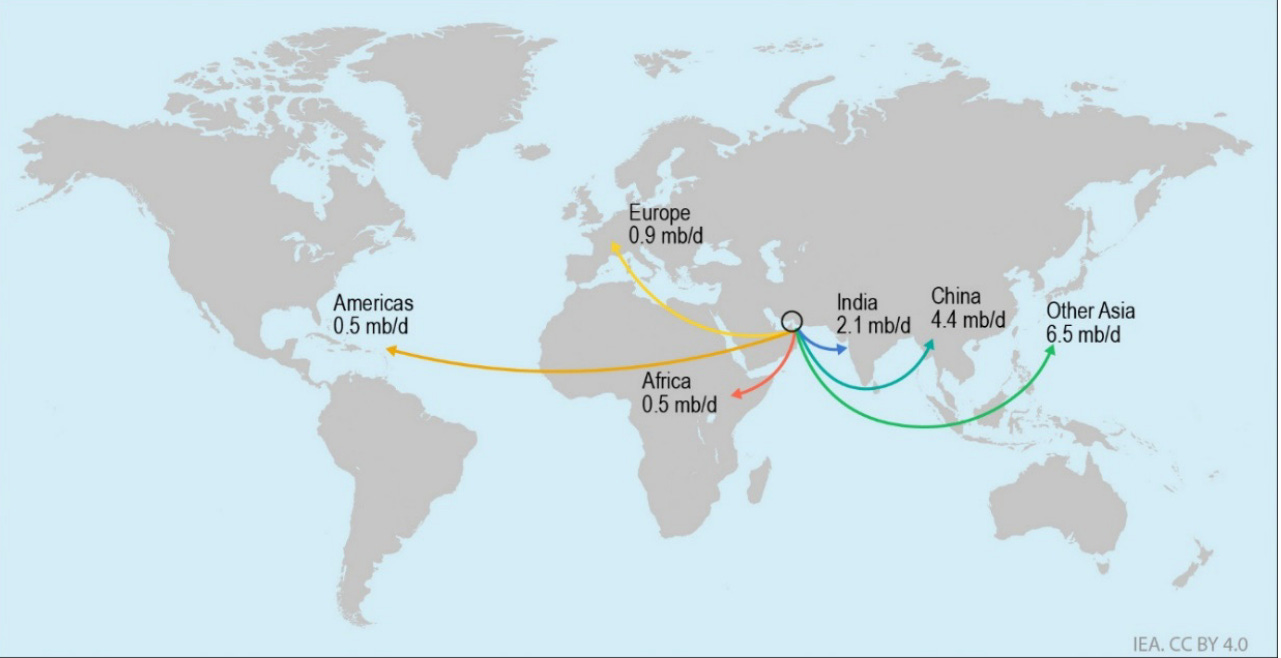
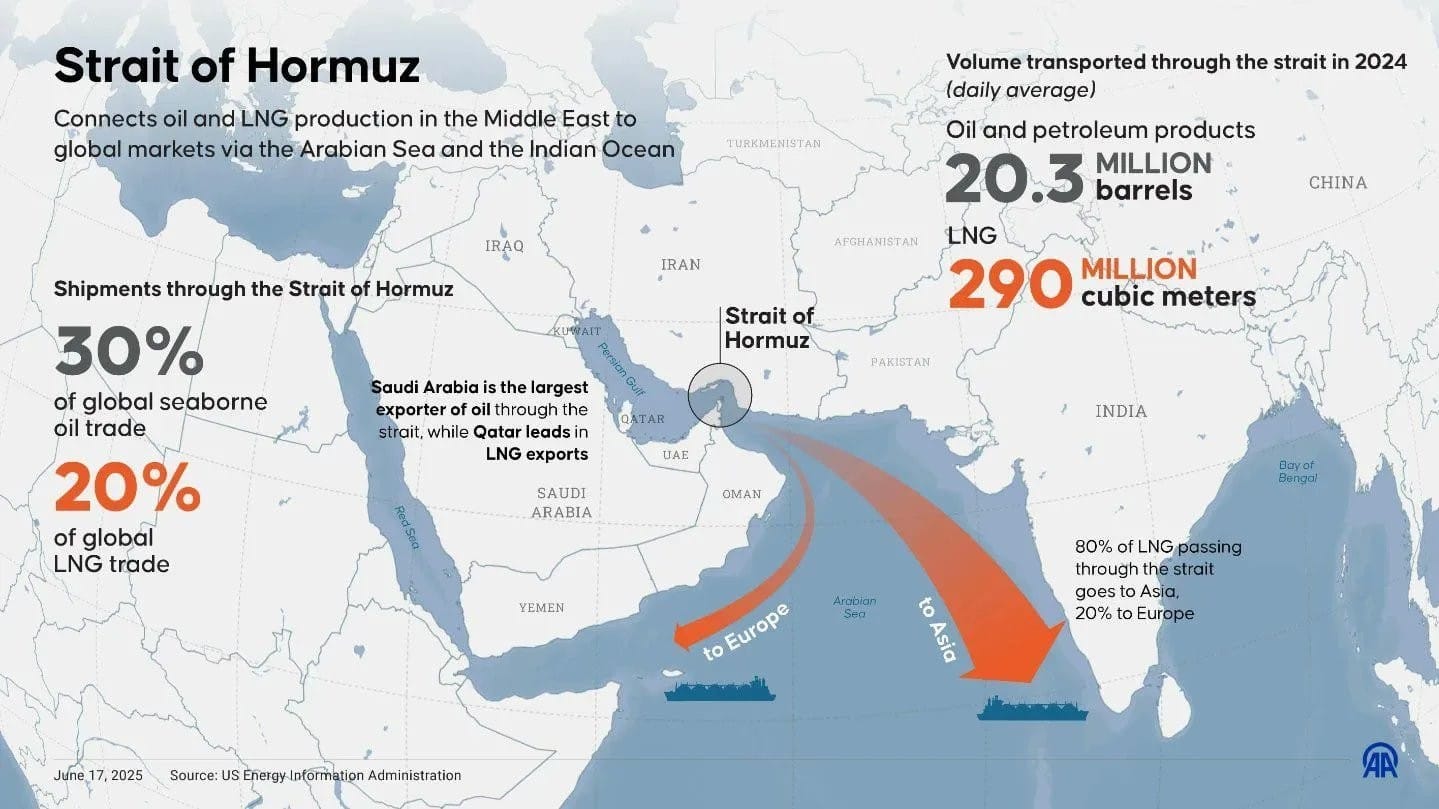
We are now in a fresh round of middle eastern gunboat diplomacy. The Straits is a 21-mile wide sea channel with multiple deepwater channels. Nearly 30% of the world’s oil consumption/ 20% of LNG, travels through every day. 70% of which goes to Asia. The Straits always measures as a strong card in Iran’s hand, however if there were an attempted closure of the straits, there are several elements that need to be considered in measuring the price impacts.
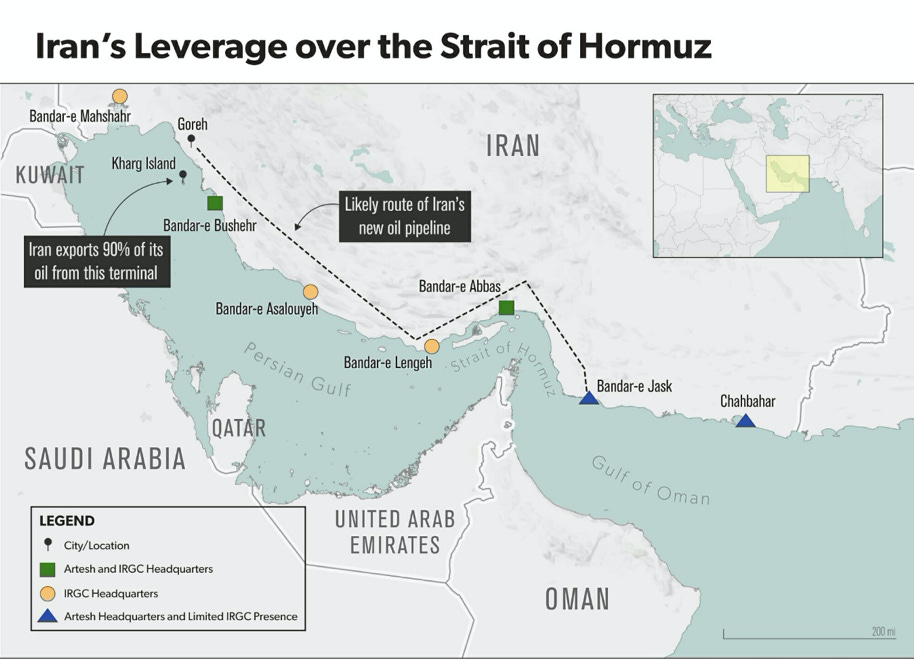
1. ‘Closure’ is impossible.
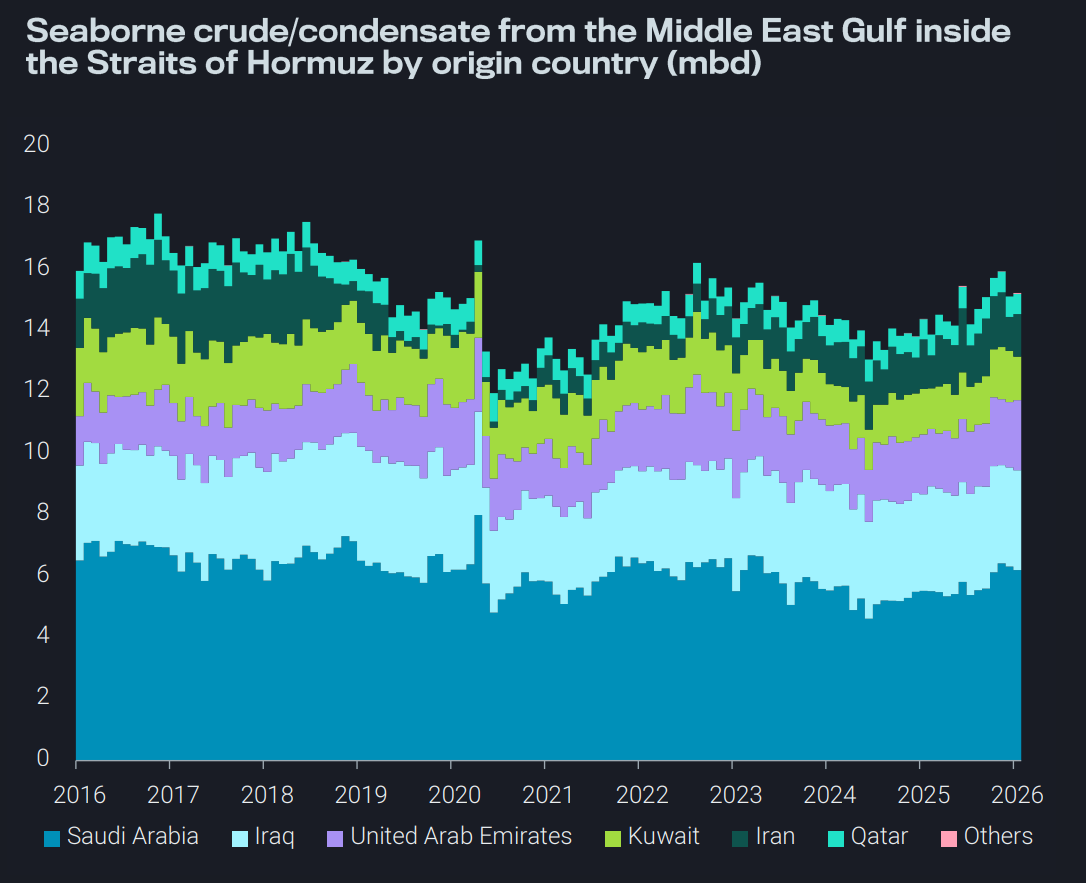
A clean, sustained closure of the Strait of Hormuz isn’t possible because Iran cannot physically seal it without triggering an overwhelming, immediate military response, while lacking the tools to hold it closed. The closest Iran can come to a ‘closure’ is to cause major disruption against ships transporting through it. There are many ways this can be effected-via drones, missiles, and mines. This is what makes conflict in the Straits quite stochastic-Many tools of disruption, no clear singular targets for US Navy assets in the area. - see below
2. Real supply impact
A closure would indeed be an extreme pricing event on the entire oil curve, with front month prices to go parabolic. The headline impact would be on 20-25million barrels per day. The largest move I experienced in oil outside of COVID-19 was Houthi drone attacks on Saudi refinery facilities, which was a 15% gap up move on a Sunday/Monday electronic reopen. Personally, I think we would reprice in the order of 20-30% up over such an event. This would cause US naval assets in the region to deploy directly into the Straits, opening up safe passage again. Currently, they are positioned on either side of the Straits. The impact would cause an immediate rerouting of any unloaded cargos back into the pipeline network that is estimated to be able to handle only 6mbpd- about 30% of the corridor’s normal flows.

3. The Hot Mess scenario
Any serious Iranian attempt to close the Strait of Hormuz would likely be asymmetric and multi-domain. Beyond maritime harassment, Iran could layer in land-based military threats, proxy actions, and labour-force strikes or work stoppages at ports, terminals, and upstream facilities, amplifying disruption without crossing clear escalation thresholds. The strategy would be sustained uncertainty. This effectively becomes the snake with many heads for The US forces in the region. I see this as being a maximum conflict scenario, where military might would not be able the dominant factor. This would have an undefined end to hostilities effectively. Brent/WTI spreads would blow out to the upside rapidly, to then normalise just as fast.
Priced in/ Priced out
As we are currently see, the market has priced in the above risks somewhat by about $5. With a 3-4% range covered up/down in the last week, traders have been waiting to price out the risks with little macro reason to actually do so. We have seen drone attacks on US ships, Iranian Gunboat attacks and a heating rhetoric as the market focused towards the Friday (6th Feb) meeting.

The result of the meet was a fat nothingburger. The extra sauce was that Iran is refusing to hold talks on nuclear strategy. In return, The Trump administration has sanctioned 14 tankers and 2 individuals to increase pressure.

Getting to the point-the risks of a 12 day war level of conflict seem to be only 30% priced in. Should this conflict go hot, it is important to monitor the situation for the level of sustained warfare probability. Should the Iranian tactics go multi domain ie. land/sea, air, labour strikes, the disruption to global supply should be considered sustained. The market should not allow trapped sellers to exit.
By the same token, if there is constructive rhetoric out of the White House, matched with Iranian rhetoric, the risk premium will be removed rapidly. See this week’s main Oil Report ‘TRADE’ section for more analysis and detail.
Conclusion
At its core, the Strait of Hormuz is not a stop button on global oil supply, it’s a lever that gets pulled whenever pressure needs to be applied. History tells us closures don’t hold, navies show up quickly, and flows eventually find a way through or around. What does change, always violently, is price. Short, sharp disruptions can be faded, but if Iran leans into a messy, multi-domain strategy like shipping, drones, proxies, labour, the market is forced to carry that risk for longer.
That’s the line traders need to watch. This isn’t about whether Hormuz “closes”, it’s about how uncomfortable the transit becomes and for how long. Risk will find its price.
I’m pretty sure there are only 2 men to sort this situation out.

Disclaimer & Disclosure
For informational and educational purposes only. This publication does not constitute investment advice, a solicitation, or a recommendation to buy or sell any financial instrument. The author is not a registered investment adviser, commodity trading adviser, or financial analyst. All views expressed are personal opinions based on publicly available information. Trading futures, commodities, and derivatives involves substantial risk of loss and is not suitable for all investors. Past performance is not indicative of future results. Readers should conduct their own due diligence and consult a qualified financial professional before making any trading or investment decisions. The author may hold positions in instruments discussed.