


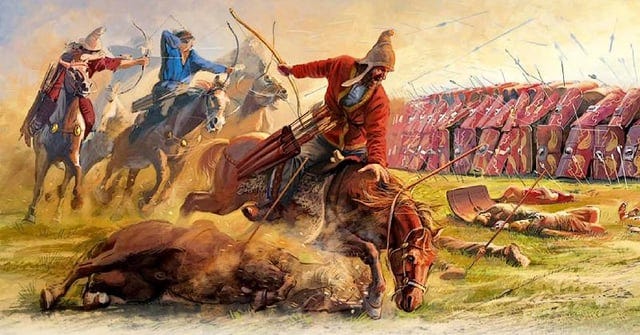
Roman Disaster at Carrhae, 53 BC
Was this the Greatest tactical victory of all time? - Battle of Carrhae 53 BC
Triumvirate (ancient Rome)
In early March, researching for The Oil Report, I went looking for historical precedent of this Iranian war. A great power overcommitting to a conflict it didn’t need, entering unprovoked, and rapidly losing control of the narrative. I found it in 53 BC.
The Battle of Carrhae. The territory Marcus Licinius Crassus invaded corresponds almost exactly to modern-day Iran. He never came back. Neither did his son. Two thousand years on, the geography is the same. So are the mistakes.
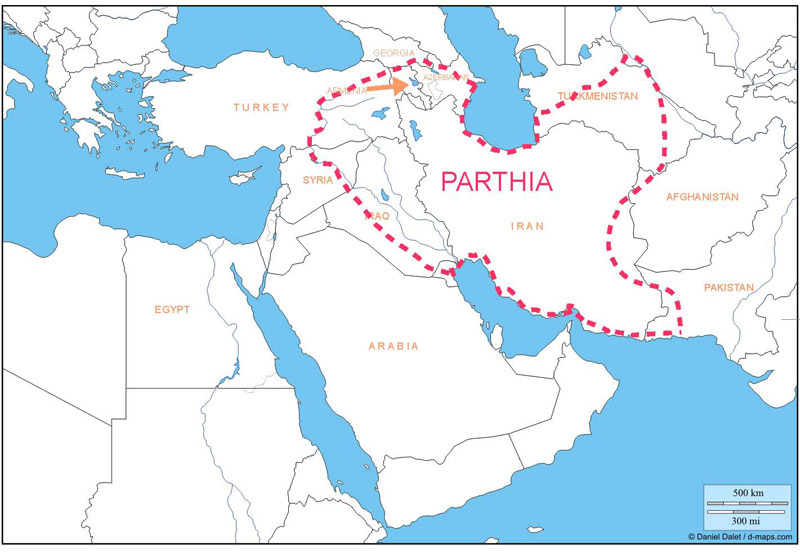
The Battle
To understand why Carrhae matters, you need to understand how completely Rome walked into it.
Crassus was the wealthiest man in Rome - richer than Caesar, richer than Pompey, part of the First Triumvirate and acutely aware that the other two had military glory and he did not. Caesar had Gaul. Pompey had the Eastern Mediterranean. Crassus had money and a political problem. He needed a war, and Parthia looked like an easy one.
It wasn’t.
He marched seven legions - roughly 44,000 men - into Mesopotamia in 53 BC without Senate authorisation, against an enemy he had fundamentally misread. His Syrian allies actively misled him about Parthian strength. His intelligence was wrong on almost every dimension. The Parthian general Surena was 30 years old, a tactical genius, and commanding a force designed for exactly this kind of engagement - not the set-piece battle Rome had spent centuries perfecting. Surena didn’t meet Rome head-on. He never intended to.
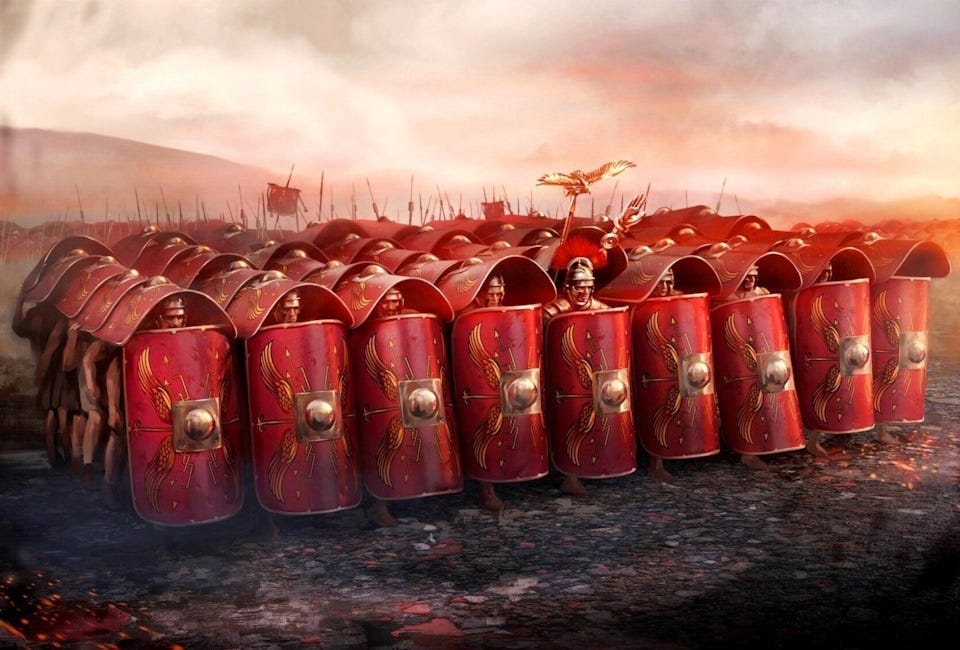
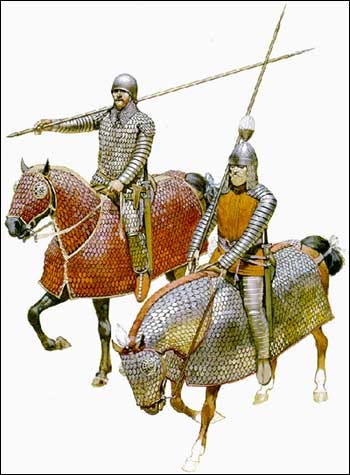
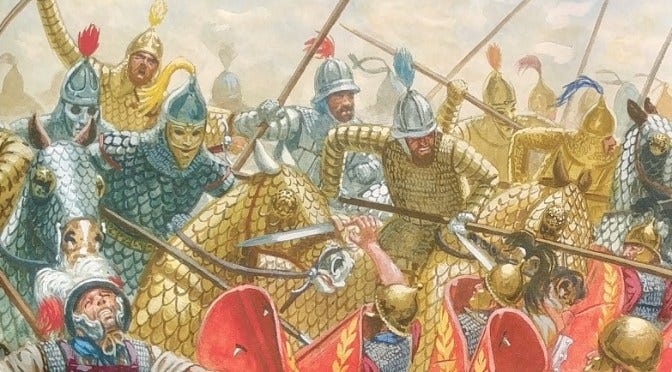
Instead, he deployed what amounted to the ancient world’s first combined arms force: heavy cataphract cavalry - man and horse both armoured in scale mail - supported by thousands of horse archers on lighter mounts. The archers circled the Roman formations on the open plain near modern Harran in southeastern Turkey, raining arrows from distance, never closing, never committing. When the Romans charged, they retreated. When the Romans locked into the defensive testudo formation (see below), shields overlapping above their heads, the archers kept shooting - aiming at feet and legs, the gaps in the shell.
The genius of it wasn’t the cavalry. It was the logistics. Surena had pre-positioned a camel train carrying thousands of replacement arrows behind the battle line. Roman commanders had assumed the archers would exhaust their supply and be forced into close combat. They didn’t. The arrows didn’t stop. The camel train kept coming. Crassus’ son Publius led a cavalry charge to break the encirclement. Surena’s horse archers feigned retreat, drew him out, turned and destroyed his force almost entirely. His head was brought back to the main Roman line on a spear. The English phrase “parting shot” actually comes from a tactic employed by Parthian horse archers called the “Parthian shot,” in which the archers would engage in a real or feigned retreat. They would turn back 180 degrees in their saddles to fire at the enemies chasing them.
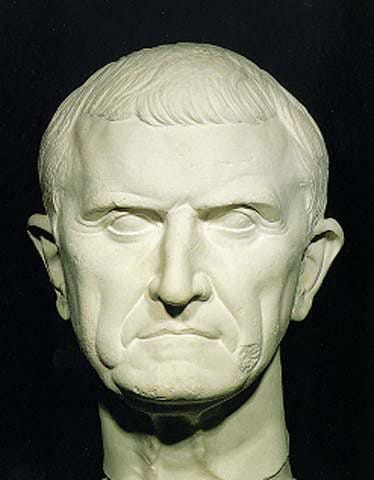
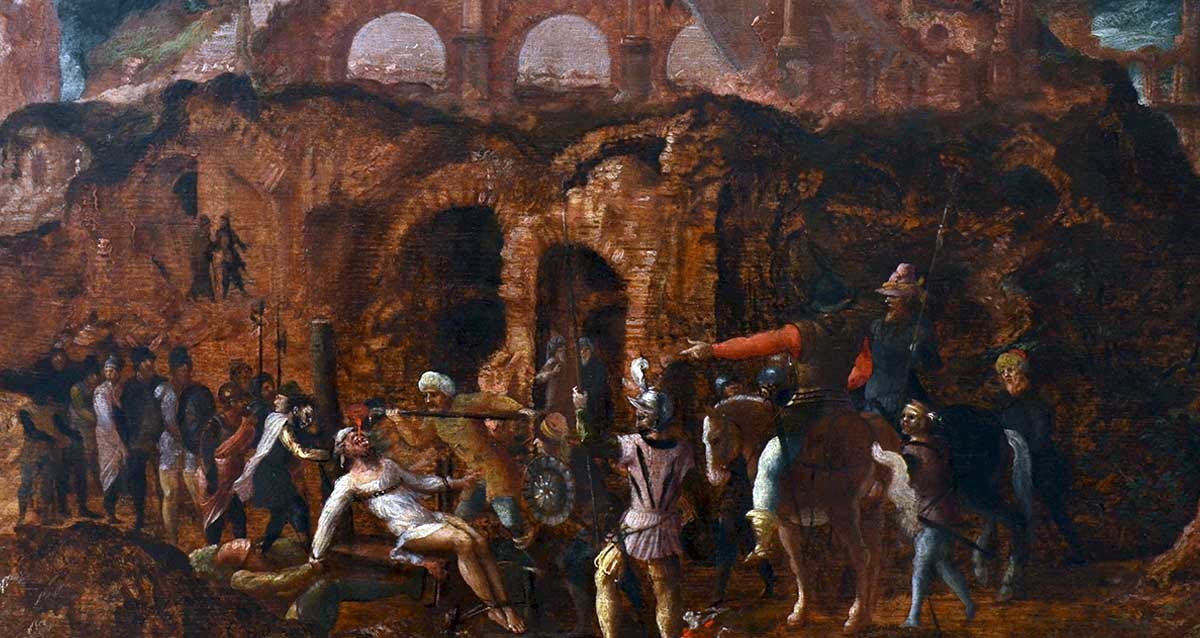
By the end of the first day, Rome had no answer. The legions couldn’t advance, couldn’t resupply, couldn’t force decisive engagement. Thousands were dead. Morale had collapsed. Crassus negotiated a meeting with Surena to discuss terms and was killed during it - some accounts say molten gold was poured into his mouth, a bitter commentary on the greed that had started the whole thing. Of 44,000 men, roughly 10,000 made it out alive.
It remains the single most crushing defeat in Roman military history. Not because of the body count - Rome had survived worse. Because of what it demonstrated: that the most powerful conventional military force in the world could be neutralised, exhausted and destroyed by an enemy that simply refused to fight on its terms.
Parallels -The asymmetric trap.
This is where it gets uncomfortable.
Iran has used small fast boats in the Persian Gulf, and the Pentagon has been targeting them with Apache helicopters and A-10 Warthogs - asymmetric harassment at its most literal. In the war’s first week, Iran launched over 500 ballistic and naval missiles and nearly 2,000 drones. The US and its allies can shoot them down - Bahrain’s military alone intercepted 143 missiles and 242 drones - but the cost-exchange ratio is brutal. Patriot interceptors are not cheap. Iranian Shahed drones are. Surena’s camel train, updated for the 21st century.
The terrain denial. Carrhae’s open plain was Surena’s kill zone - the one terrain feature he controlled and Rome couldn’t substitute around. Hormuz is the same. Over 3,000 vessels stranded in the Middle East according to the IMO. Saudi and UAE spare capacity doesn’t help if the route is blocked - their exports transit Hormuz too. The East-West Saudi pipeline and the UAE’s Fujairah outlet provide limited relief; combined, they cover maybe 6.5mbpd in a chokepoint that normally handles 20mbpd. You can’t pipeline your way out of this.
The intelligence failure. Crassus relied on allies who fed him bad information about Parthian dispositions. The US assessed Iran lacked the ballistic capability to threaten Diego Garcia - roughly 2,500 miles from Tehran. Britain then confirmed Iran had fired two ballistic missiles at the Diego Garcia base. That is a significant intelligence miss for a war that was supposedly modelled on known Iranian capabilities. The CIA and IAEA had also assessed Iran lacked active nuclear enrichment capability. The operational intelligence that started this, in other words, has the same structural reliability as what Crassus was told about Parthian cavalry.
The illusion of victory. After Carrhae, Rome spent decades insisting the defeat wasn’t catastrophic. Subsequent campaigns were framed as recovery and revenge. Augustus eventually resolved the captured legionary standards through diplomacy - after years of pretending military options remained viable. The gap between stated outcome and reality on the ground fed directly into the civil wars that followed. This loss shut down the great Roman eastern expansion, serving as a highwater mark of sorts for the stretched empire.
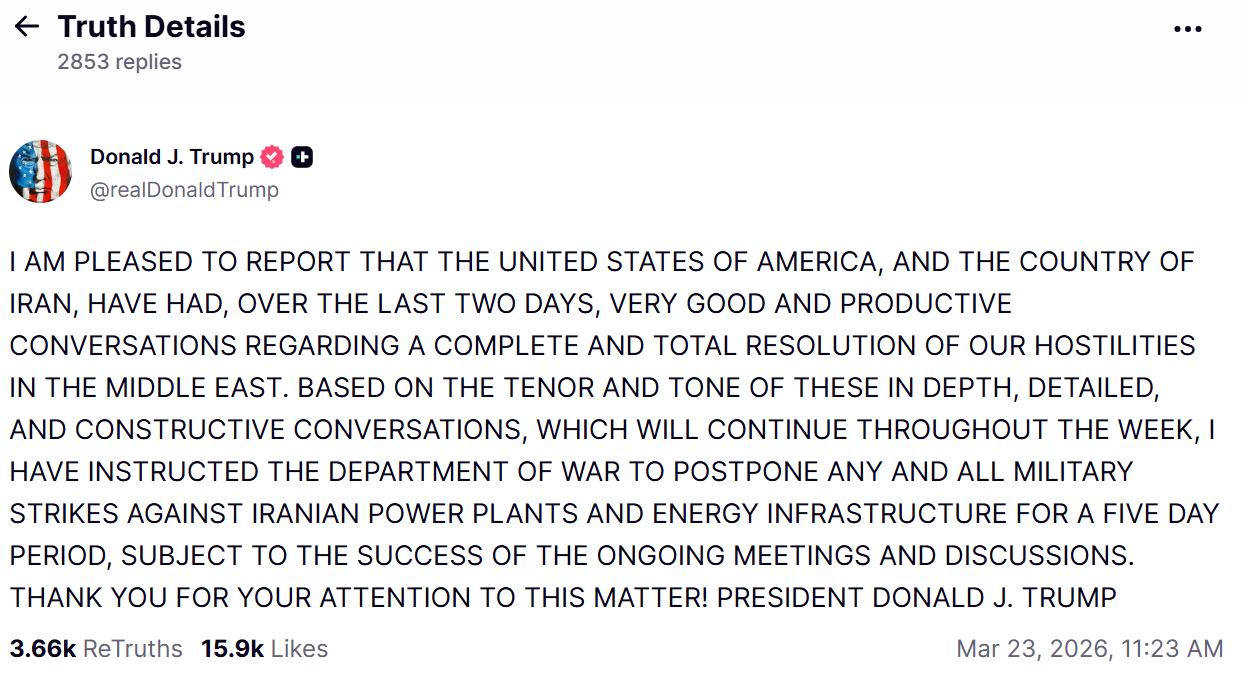
Trump says the US is “getting very close to meeting its objectives” and now ‘we have won’ and considering “winding down” military efforts, while simultaneously requesting an additional $200bn from Congress and redirecting 5000 additional marines to the region. The Carrhae gap. Claiming imminent victory while doubling the camel train.
What Carrhae Didn’t Predict
The analogy has limits and they matter. Rome had no air power. CENTCOM claims to have struck 8,000 Iranian targets since the war began. Iranian missile and drone attacks are reportedly down 90% from early-war peaks. Khamenei is dead. Iran’s navy is largely gone. The Parthians didn’t suffer anything like this.
But Carrhae’s lesson was never about body counts. It was about whether destroying an enemy’s conventional forces ends a conflict in terrain where the enemy can sustain asymmetric pressure indefinitely. Echos of Vietnam, Napoleon in Russia, Hilter in Russia etc. Surena was eventually executed by his own king for becoming too powerful. Iran’s state may fracture. But the Strait stays closed regardless of who’s in charge in Tehran - and that’s the problem that no amount of B-2 sorties solves.
Watch what Washington is actually willing to settle for. At the moment however, there is no exit possible- Read this weeks full oil report here.
Read The Oil Report for more oil focused insights & analysis weekly.
---