

In this report: Iran’s conditional Hormuz reopening, China’s refusal to curtail Iranian purchases, Saudi Arabia’s Helsinki-style regional framework, and the structural shifts reshaping Middle East energy flows.
BRENT LAST WEEK +7.87% ($7.97) for the week. Open $104 High $109.75 Low $102.81 Close $109.26
Articles
Araghchi Says Iran Opposes Nuclear Weapons, Pledges Hormuz Security
Saudi Arabia floats Middle Eastern non-aggression pact with Iran
China demand destruction 8% since mid-March
UAE’s new oil pipeline push to double export capacity, bypassing Hormuz
OPEC Signals Unity After U.A.E. Exit With Pledge to Boost Oil Output
View
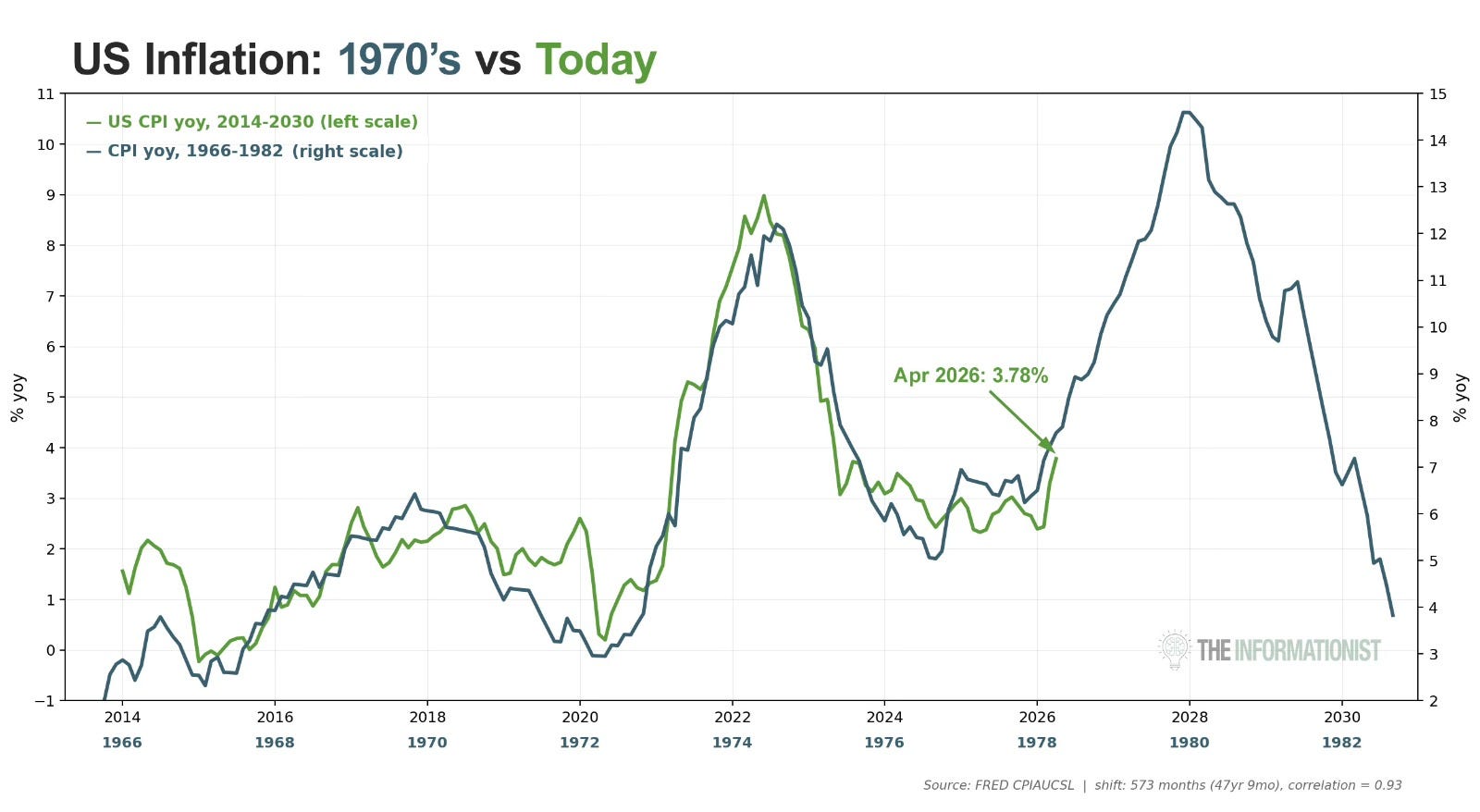
It is approx 76 days since Israel bombed Iran, thus initiating joint strategic preemptive strikes by Israel and The US. In that time, we have seen 13.8mbpd production shut in, export losses exceed 13.8mbpd, with cumulative supply losses of 360 mb in March, 440mb for April and 195mb in May so far. Total 995mb lost in 2.5months. 1 Billion gone and The US PPI came in during the week at 6% YOY, with Euro Zone inflation high at 3% and set to move higher. The medium term effects are now here.
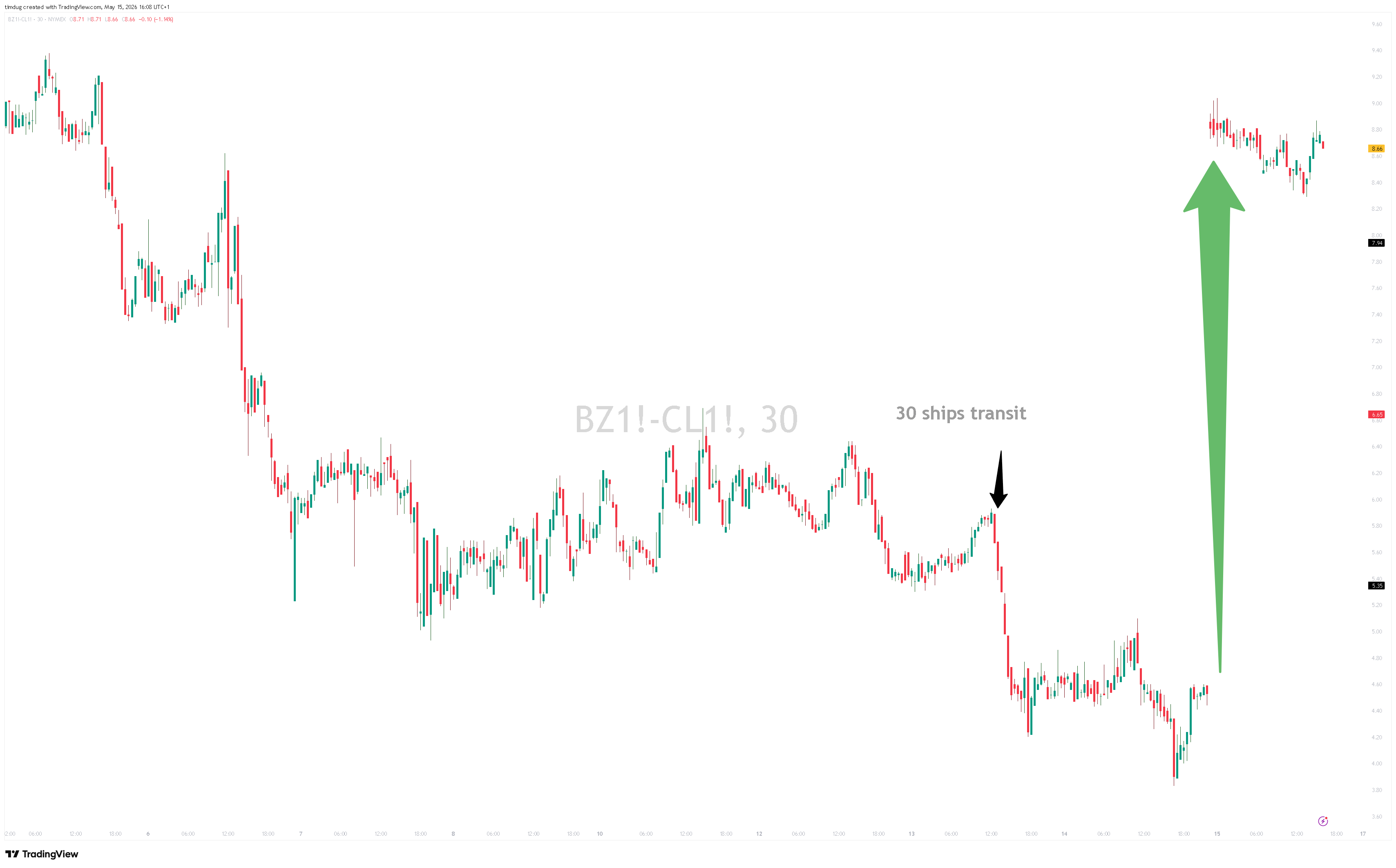
Since Wednesday, we have had 30 ships (mainly Chinese) successfully transit The SOH. A well played move from President Xi, knowing that the US blockade would not force them back while he and Trump were meeting. The Market Wednesday and Thursday knew about these 30 ships. The Brent/WTI spread took a small dive. Brent finished Thursday up slightly. The market has clearly sold the rumour of the opening and is buying the fact! Beautiful!
There is now a super clear divergence between WTI and Brent. The pricing of the spread has to now consider tolls and the constrained, obvious deficits on both production and exports from The Gulf. WTI will not.

Overall, combined with the last 48 hours of activity, we can slowly start to see that this is a complete calculus shift, versus the failed Israeli prompted aspirations of The US. The effective closure of SOH as we know it, is over…..bar the shouting. So what’s the shouting?
On Friday, Iranian foreign minister Araghchi spoke in a live interview, stating broadly, that they are moving on without waiting for further negotiations with The US. He asserted that Tehran is currently making the necessary preparations to guarantee a "safe corridor" for all types of vessels. The Iranian official conditioned this maritime security guarantee on the normalization of the regional situation and the cessation of U.S. pressures. The statements were clear that Iran ‘‘do not want to become owners of nuclear weapons and this is not our policy"
"When American aggressions end, everything will return to its normal state"- Iranian FM Araghchi - Friday.
Iran close the door
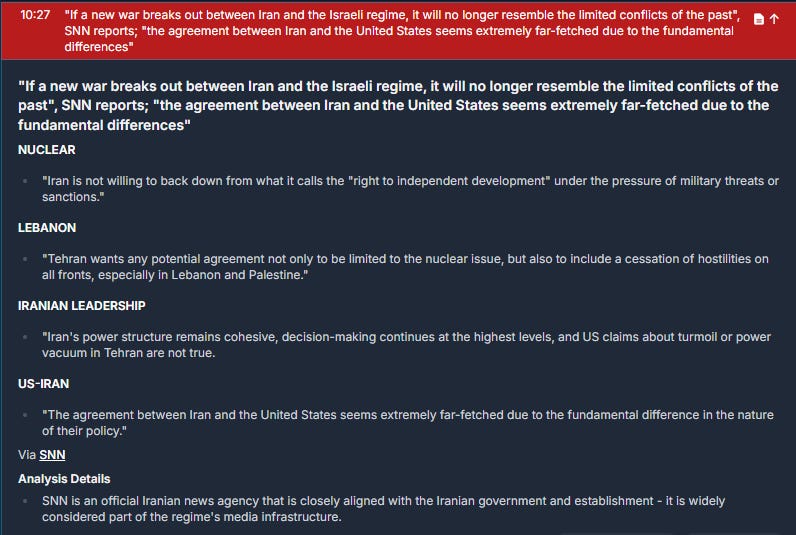
We have to understand that, while the SOH is open, we are not out of the woods in regard to escalation of the hot conflict. Referred to by some as ‘The kinetic’ situation. The SNN report from the top of this article lays out the official position. Iran have laid out their stance, and it must be met. The interview with Araghchi is great, where he lays out the reasons for why they will not engage in the US pattern of negotiations. The US are consistently bad operators in negotiations, with Trump using a meeting as fuel for propaganda rhetoric. The Iranians therefore are presented with a counterparty that can not be trusted. This is diplomacy at work. Good and bad.
China closes the door
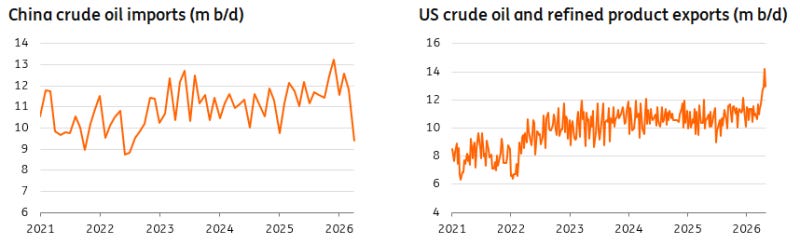
China is absorbing the war’s heaviest cost. Asian buyers lost 13.8 mbpd of Gulf crude when Hormuz closed. Atlantic Basin exports surged 3.5 mbpd in response, flowing primarily to Asia, but the maths doesn’t close - Asia still faces a structural deficit. This set up Trump’s Beijing trip: get China to stop funding Iran through oil purchases.
Xi refused. He told Trump China was “not happy with Iranian tolls” and would not sell Iran weapons. But China would continue buying Iranian oil. The world’s largest oil importer told Washington no, directly and without hedging.
The proof came immediately. The 30 ships that transited Hormuz on May 14 were Chinese vessels. Iran cleared them while Trump and Xi were meeting in Beijing. China negotiated passage directly with Tehran, not through US mediation. Beijing secured energy flows through Iran’s controlled straits, not through American diplomacy.
Xi’s refusal to curtail Iranian purchases is not symbolic. China’s continued demand provides Tehran the revenue to sustain its strategic position while Hormuz remains under Iranian control. Beijing gets discounted crude, Iran gets hard currency and validation from the world’s largest buyer, and Washington gets neither compliance nor credit.
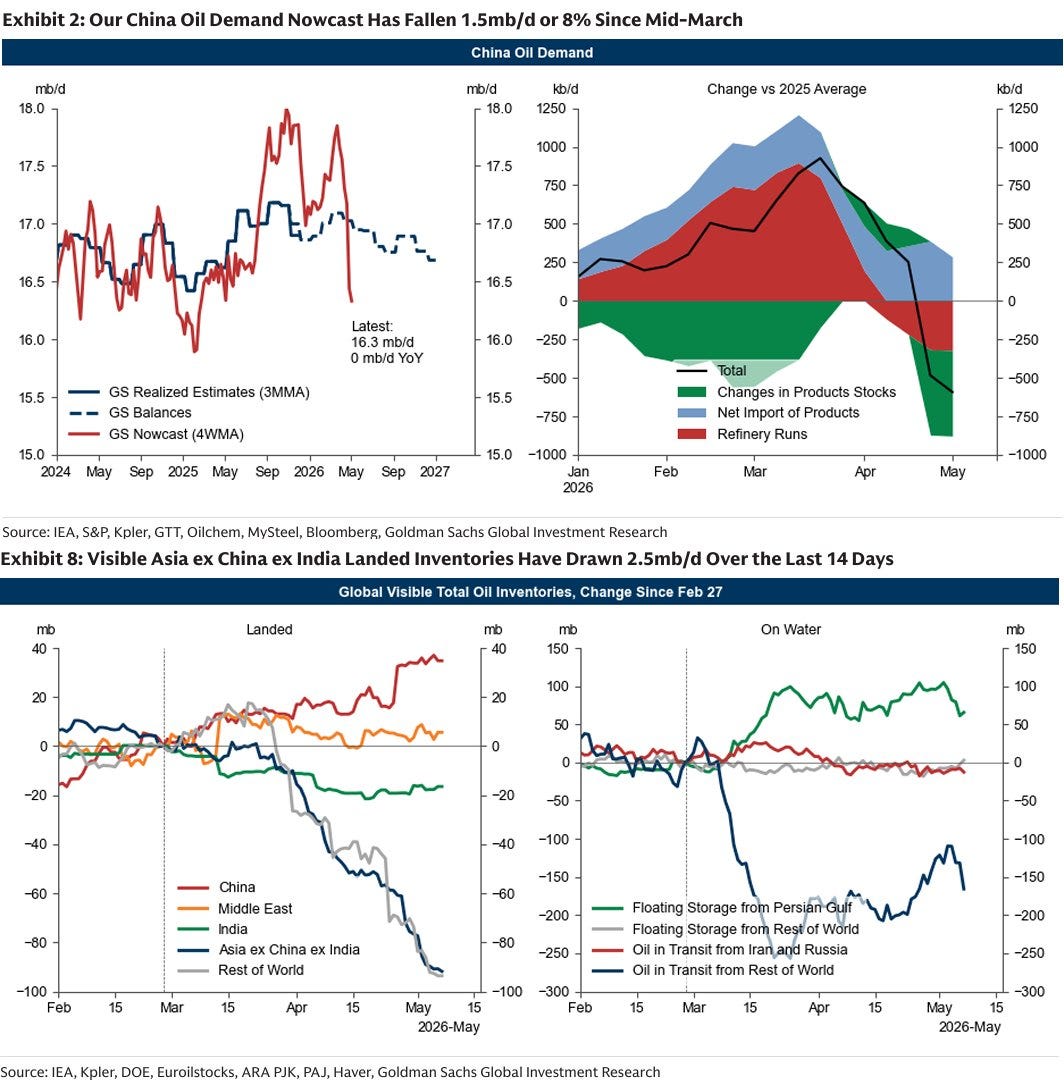
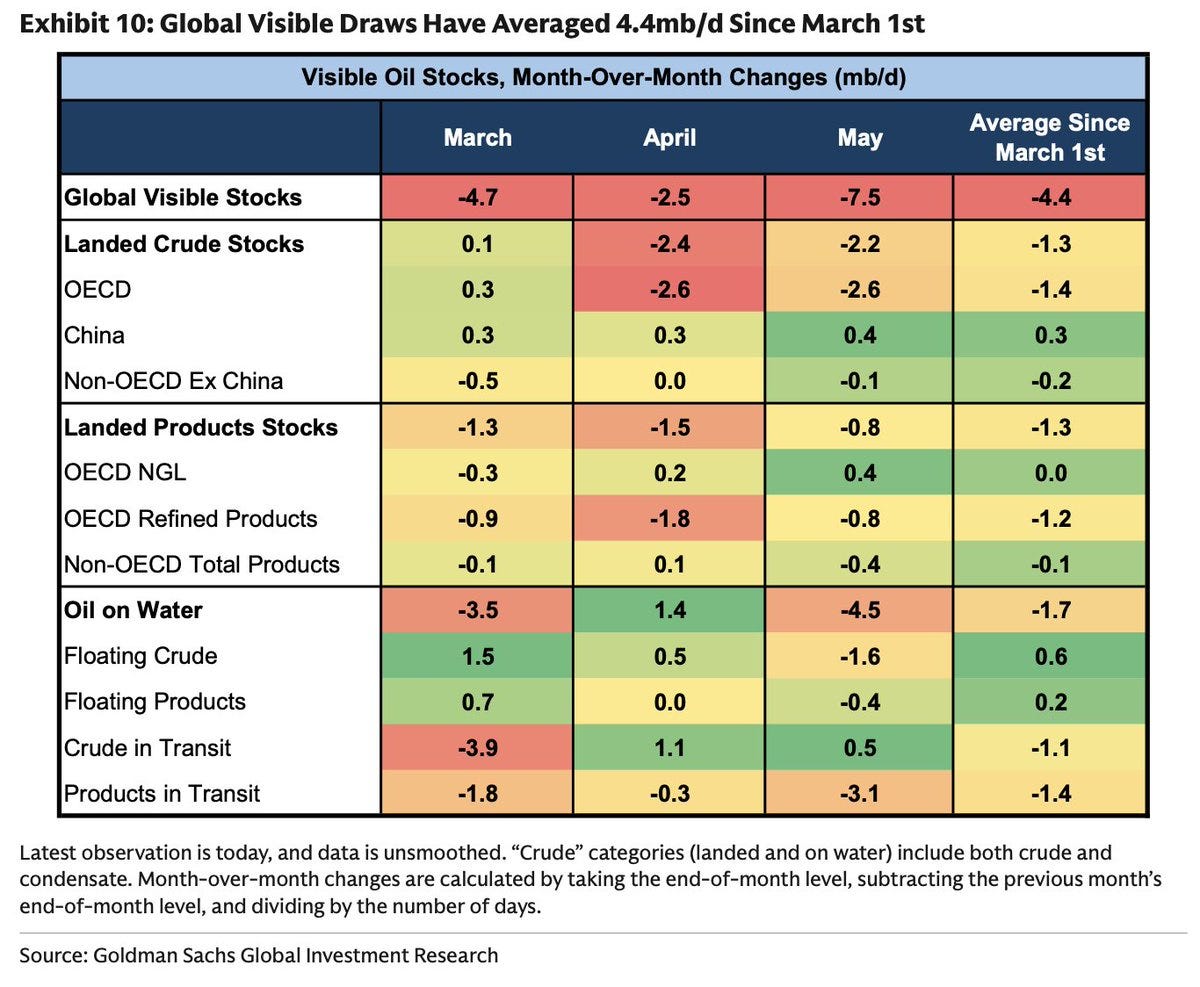
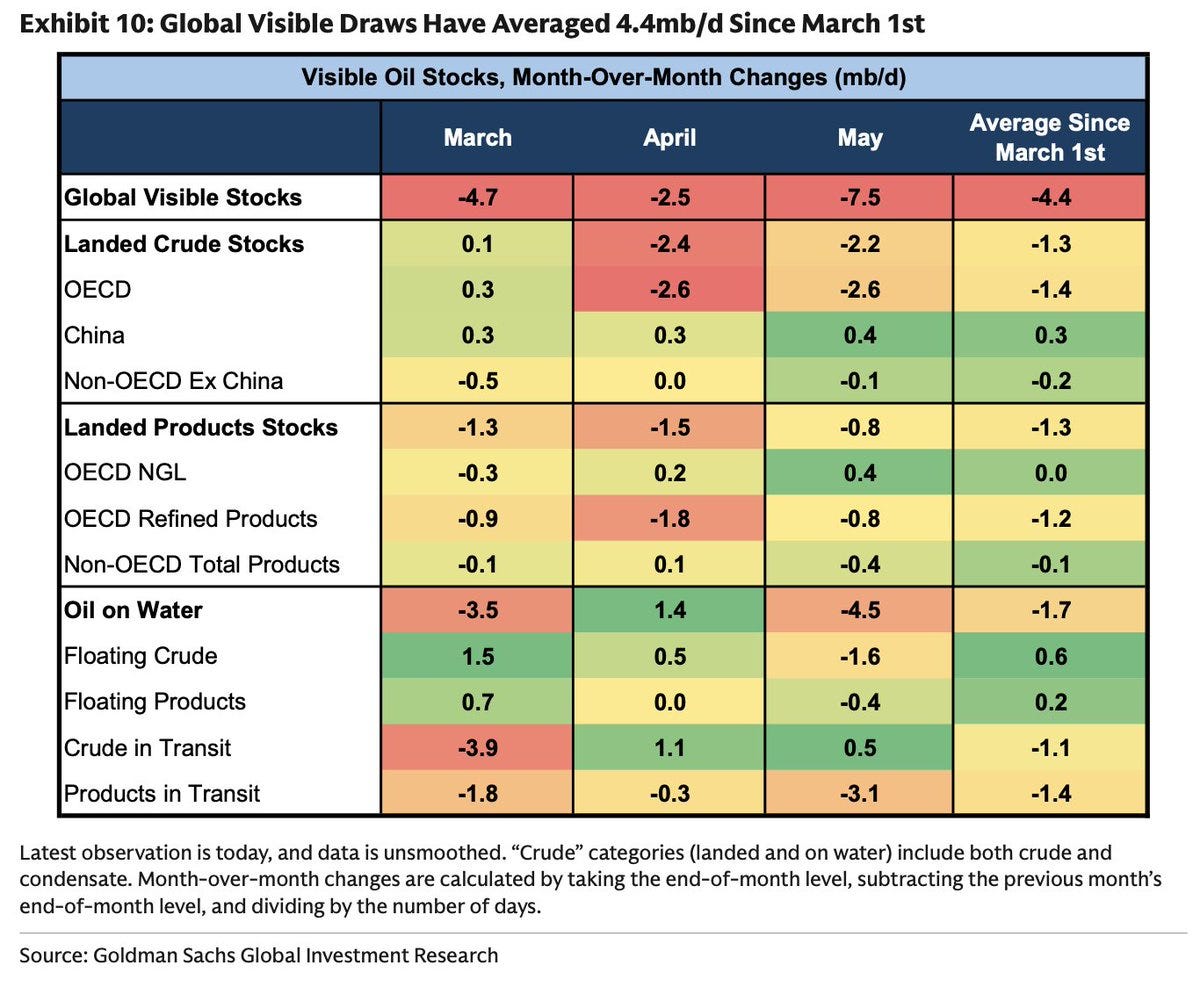
China’s demand is collapsing. It’s still buying Iranian oil. Chinese oil consumption has fallen 1.5 mbpd since mid-March, down 8% from pre-war levels, according to Goldman Sachs. Refinery runs collapsed, product stocks built, and net imports dropped sharply. But the demand destruction is not uniform. Petrochemical feedstock demand persists even as transportation fuel appetite crumbles. China still needs crude - it just needs it cheaper. Iranian barrels at a discount fit that requirement precisely.
India has become the marginal driver for transportation fuel demand. As China’s mobility demand falls, India’s continues to grow, though at subdued rates given elevated prices. The shift matters for crude quality and pricing, but the broader point holds: Asia’s two largest buyers are restructuring their import patterns independent of US trade architecture. China buys from Iran. India secures Atlantic Basin alternatives. Neither waits for Washington’s approval.
The door is closed. China chose Iran.
Saudi Arabia opens a door
Regional actors now accept the reality. On March 16, the New York Times reported that Prince Mohammed bin Salman urged the US to hit Iran harder and seize this “historic opportunity” to remake the Middle East. Less than two months later, that stance has reversed. Saudi Arabia is now promoting a Helsinki-accords-style non-aggression pact with Iran, modelled on the 1970s framework that eased Cold War tensions in Europe.
The pivot is not subtle. Riyadh is building a regional security architecture that assumes Iran’s permanence, not its defeat. As one Arab diplomat told the Financial Times: “Iran is not going anywhere, and this is why the Saudis are pushing it.” European capitals have backed the Saudi proposal, viewing it as the best path to avoid future conflict while providing Tehran guarantees it will not be attacked again.
The timing matters. Saudi Arabia watched Iran demonstrate control of the Strait of Hormuz, reject US negotiating terms, and selectively reopen shipping to China while keeping Western-aligned flows restricted. The kingdom also observed US back-channel talks with Iran focus narrowly on nuclear issues while ignoring Arab states’ primary concerns - Iran’s missile arsenal and regional proxies. The message was clear: the US cannot deliver the regional order Saudi Arabia sought in March.
Gulf states now face what the Financial Times describes as a “wounded, more hawkish Islamic regime on their doorstep” once the large American military presence scales back. Rather than rely on US protection, Saudi Arabia is constructing its own framework. The kingdom has already signed a mutual defence pact with Pakistan and is reportedly expanding it to include Qatar and Turkey. Pakistan’s defence minister confirmed this week that Islamabad has developed a proposal to build an “economic and defence alliance that will minimize dependence outside the region.”
The UAE remains the outlier, maintaining its hawkish stance toward Iran and deepening ties with Israel. But the broader realignment is underway. Saudi Arabia, Pakistan, Turkey, and Egypt are deepening defence and foreign policy coordination independent of Washington. Iran controls the Strait. Saudi Arabia is negotiating directly. The US role as regional arbiter is fading in real time.
Alternative Infrastructure
Iraq and Pakistan signed bilateral energy deals with Iran this week to ship oil and liquefied natural gas from the Gulf. Both agreements bypass US sanctions and demonstrate Iran’s ability to manage energy flows through its sphere of influence regardless of Western enforcement. The deals are not large enough to reshape global supply, but they signal a willingness by regional actors to transact directly with Tehran without waiting for US permission.
The UAE is building permanent infrastructure to avoid the problem entirely. Sheikh Khaled bin Mohamed bin Zayed Al Nahyan directed ADNOC to accelerate the West-East Pipeline, which will double the company’s export capacity through Fujairah when it becomes operational in 2027. The pipeline bypasses Hormuz completely, routing crude to the Gulf of Oman. The UAE exited OPEC on May 1 and is now investing in independent export pathways that assume Hormuz risk is structural, not temporary.
OPEC+, meanwhile, is performing theatre. At the May 3 meeting, the seven remaining members agreed to a 188,000 bpd quota increase for June. The hike is symbolic - the alliance cannot physically deliver the additional barrels, with Hormuz under Iranian control. The market understood this immediately. Brent fell briefly, then recovered, ignoring the gesture. When your quota increases mean nothing because you cannot access export routes, the organization’s relevance is in question.
Regional actors are building around US authority and OPEC coordination. Iran controls the choke point. The UAE builds bypasses. Iraq and Pakistan negotiate directly. OPEC announces quotas it cannot fulfil. The old architecture is being replaced in real time.
The Net Net
Read on for The Net Net, EIA data analysis and alerts, Commitment of traders analysis and trade charts.